
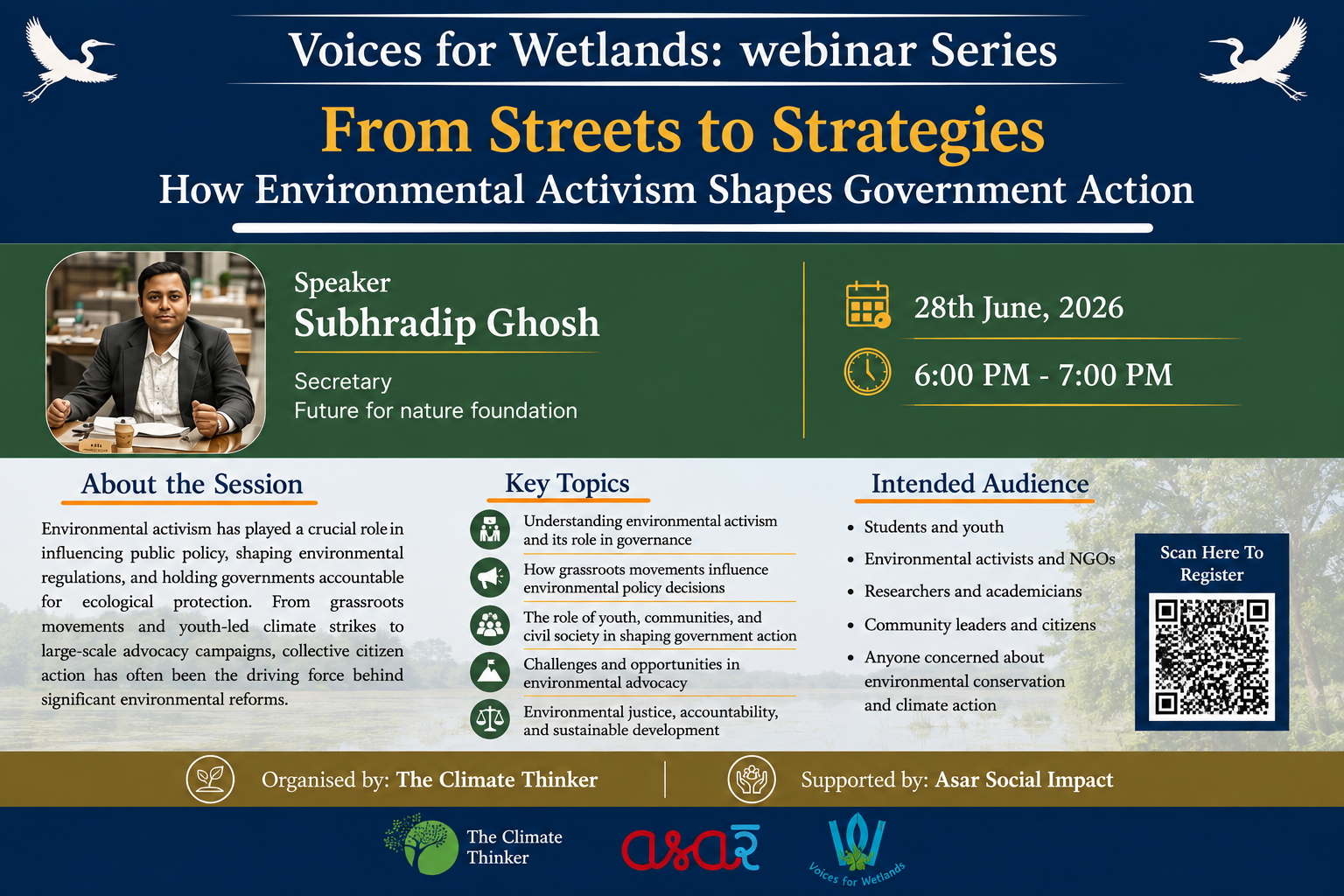
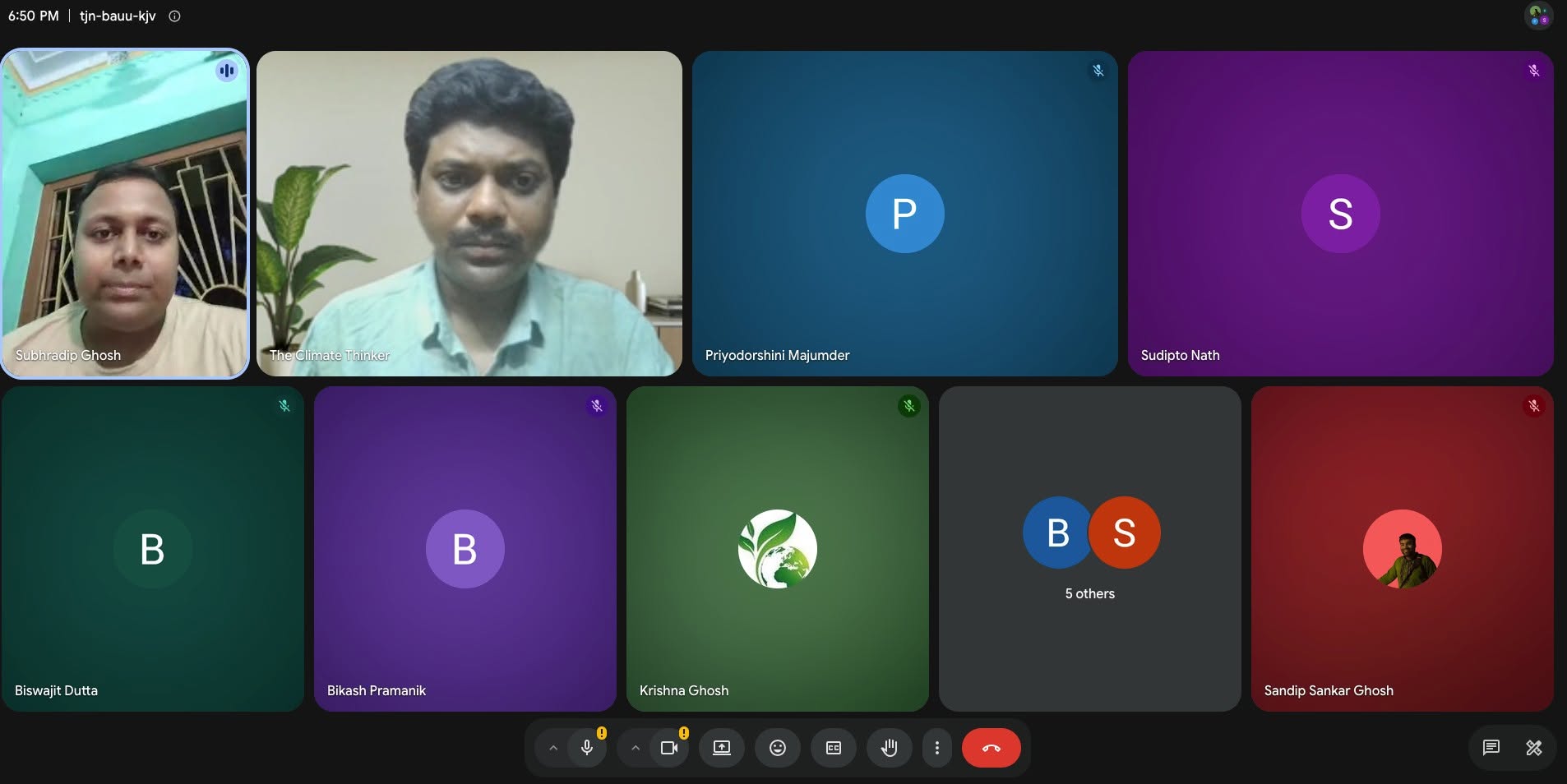
As part of our webinar series, we explored how grassroots movements, community participation, and youth-led initiatives can influence government action on environmental issues. Mr. Subhradip Ghosh highlighted the power of collective citizen action in shaping environmental policies, promoting accountability, and advancing sustainable development. The session also examined challenges and opportunities in environmental advocacy, emphasizing the important roles of civil society, local communities, and young changemakers in building a more sustainable and environmentally just future. An engaging exchange of questions and ideas reflected growing interest in environmental governance and climate action. We sincerely thank Mr. Ghosh and all participants for contributing their expertise, perspectives, and enthusiasm to this meaningful conversation.
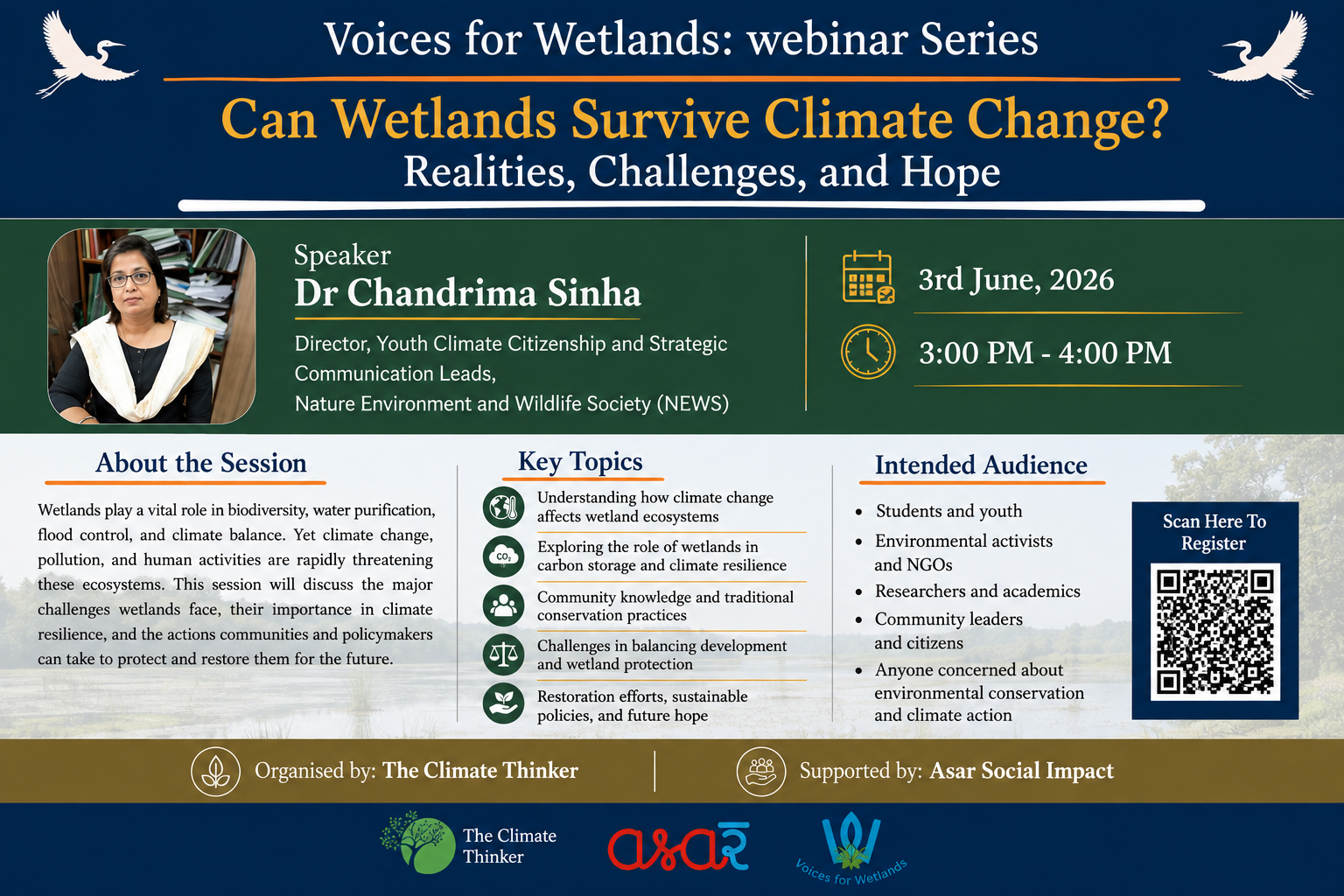
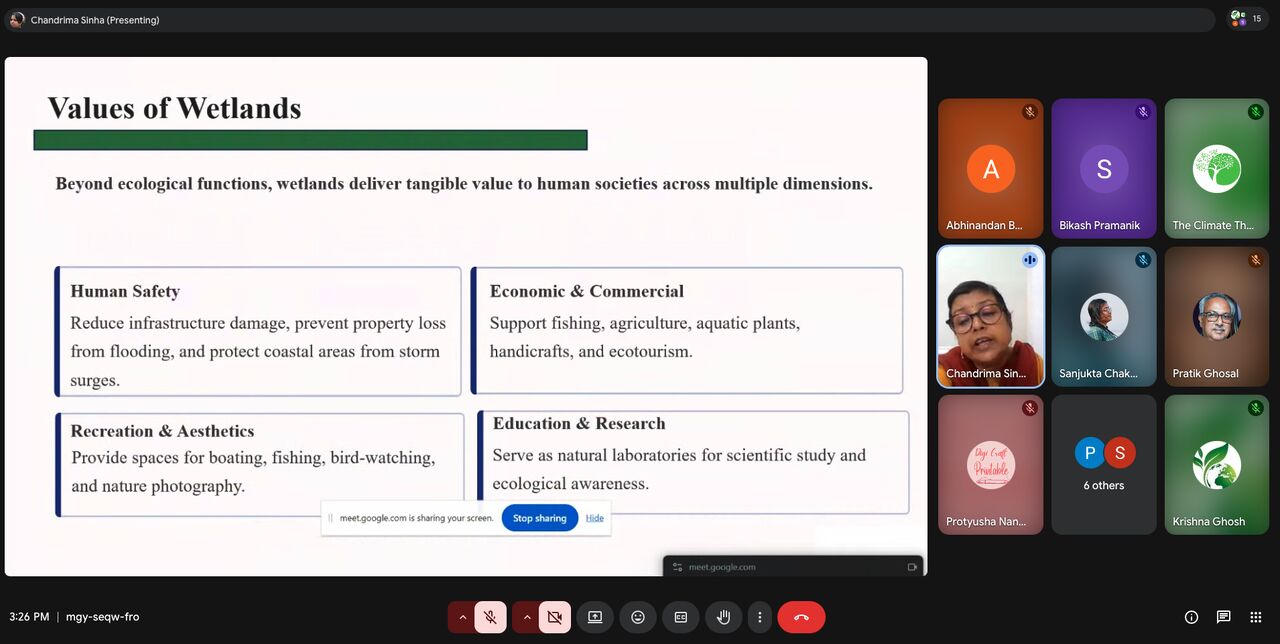
As part of the Voices for Wetlands Webinar Series, we hosted an insightful session on “Can Wetlands Survive Climate Change? Realities, Challenges, and Hope,” featuring Dr. Chandrima Sinha, Director, Youth Climate Citizenship and Strategic Communication Leads at Nature Environment and Wildlife Society (NEWS). Dr. Sinha highlighted the vital role of wetlands in supporting biodiversity, regulating water systems, building climate resilience, and storing carbon, while exploring threats from climate change, pollution, and human activities. The session discussed climate impacts, carbon sequestration, traditional conservation practices, development-conservation challenges, and restoration efforts. An interactive discussion with participants brought valuable questions, experiences, and practical ideas for protecting and restoring wetlands.
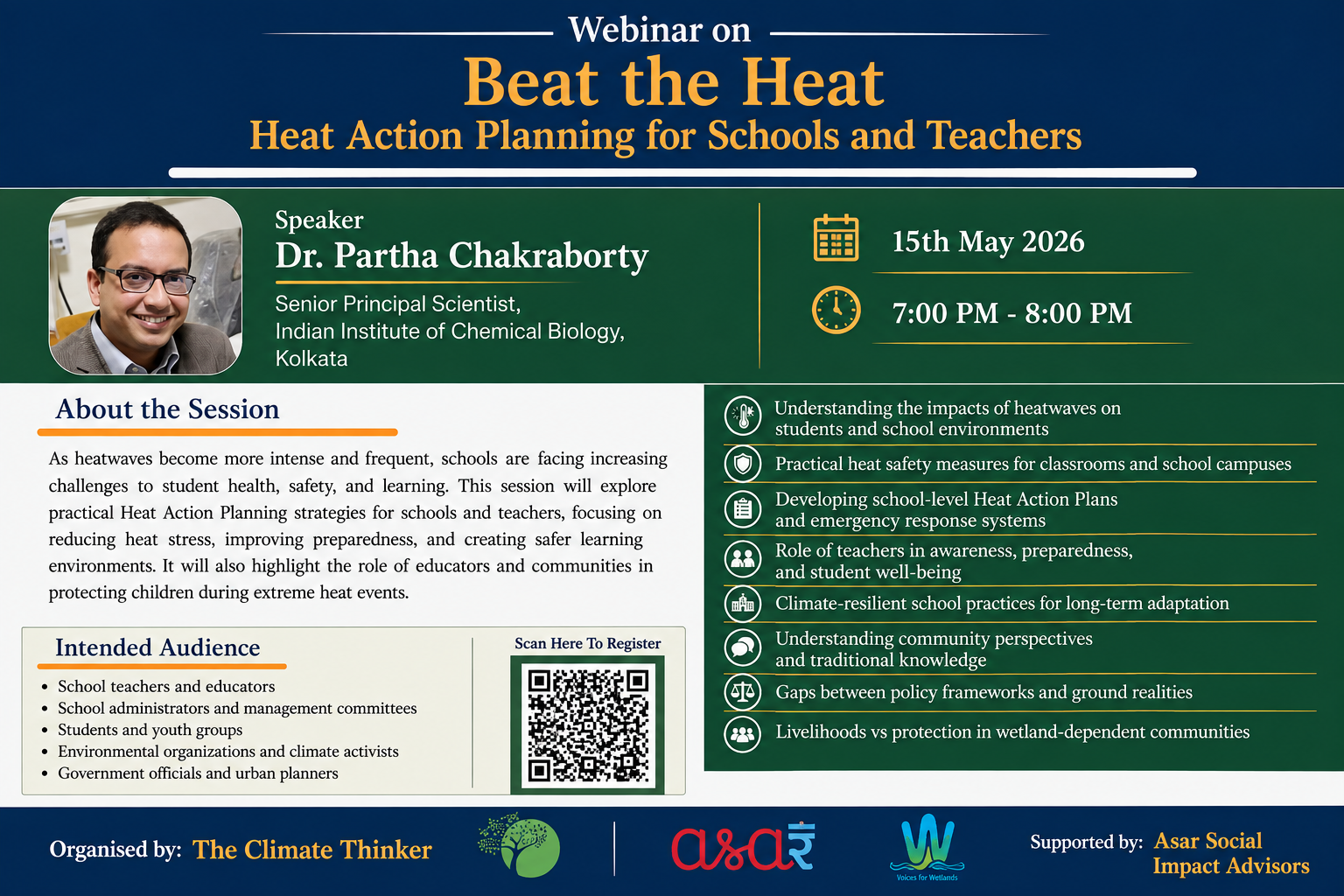
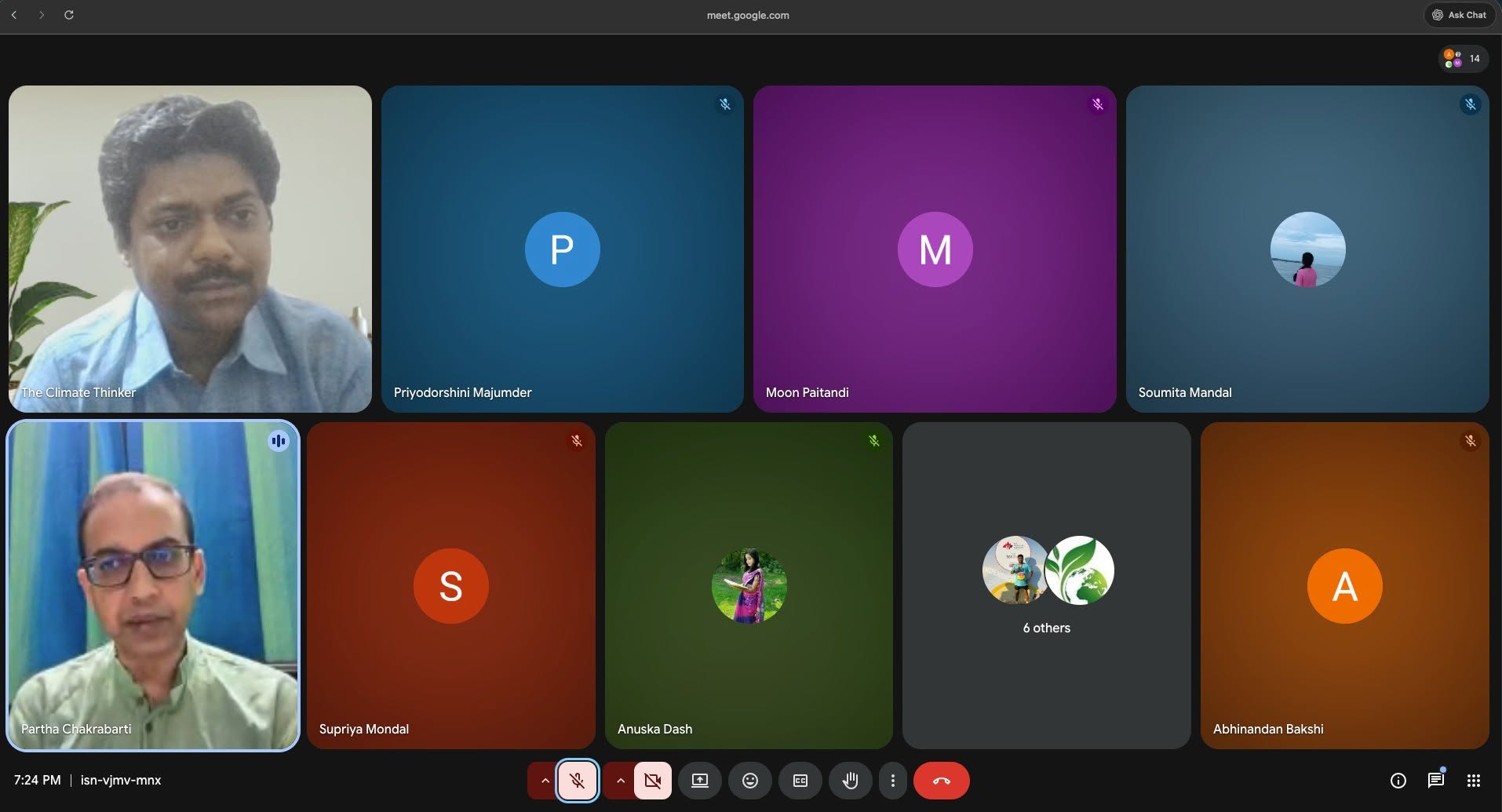
We organized an engaging webinar on “Beat the Heat: Heat Action Planning for Schools and Teachers,” featuring Dr. Partha Chakraborty, Senior Principal Scientist at the Indian Institute of Chemical Biology, Kolkata. The session explored the growing challenges heatwaves pose to student health, safety, and learning continuity, while highlighting practical heat-safety measures, school-level Heat Action Plans, emergency preparedness, and the role of teachers in building climate awareness. The discussion also emphasized climate-resilient practices and long-term adaptation strategies for educational institutions. An interactive exchange with teachers, students, educators, and environmental professionals brought valuable experiences and perspectives on heat stress and preparedness, reinforcing the importance of community participation and local action in creating safer, climate-resilient learning environments.
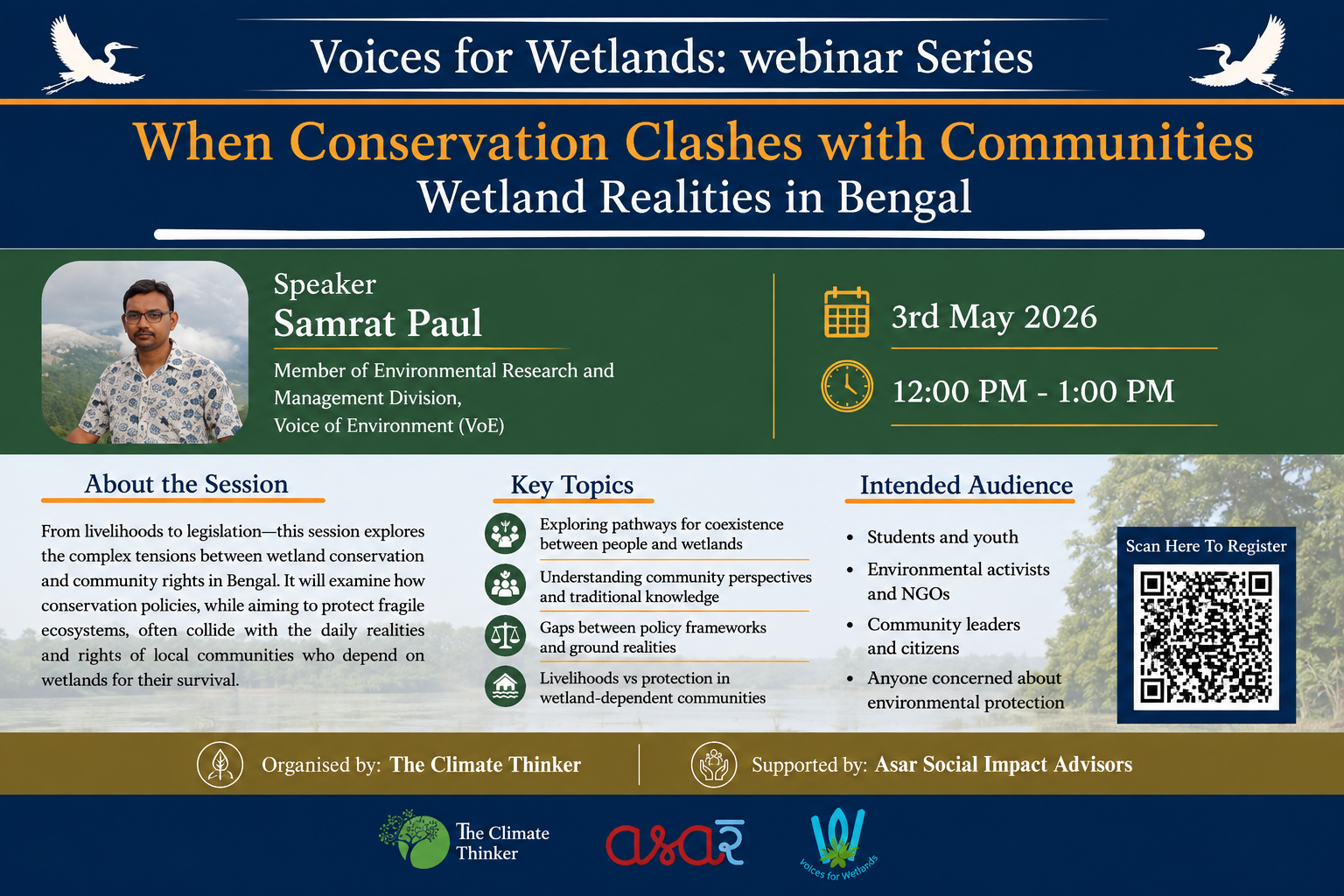

As part of the Voices for Wetlands series, we hosted an insightful session titled “When Conservation Clashes with Communities: Wetland Realities in Bengal,” featuring Samrat Paul. The session explored the complex relationship between wetland conservation and community livelihoods, highlighting how well-intentioned environmental policies can sometimes conflict with the everyday realities of people who depend on wetlands. The discussion emphasized the need to balance ecological protection with social equity. An engaging exchange followed, with participants sharing grassroots experiences, traditional knowledge, policy concerns, and ideas for coexistence. Their questions and perspectives made the session dynamic and collaborative, reinforcing the importance of inclusive approaches to wetland conservation.
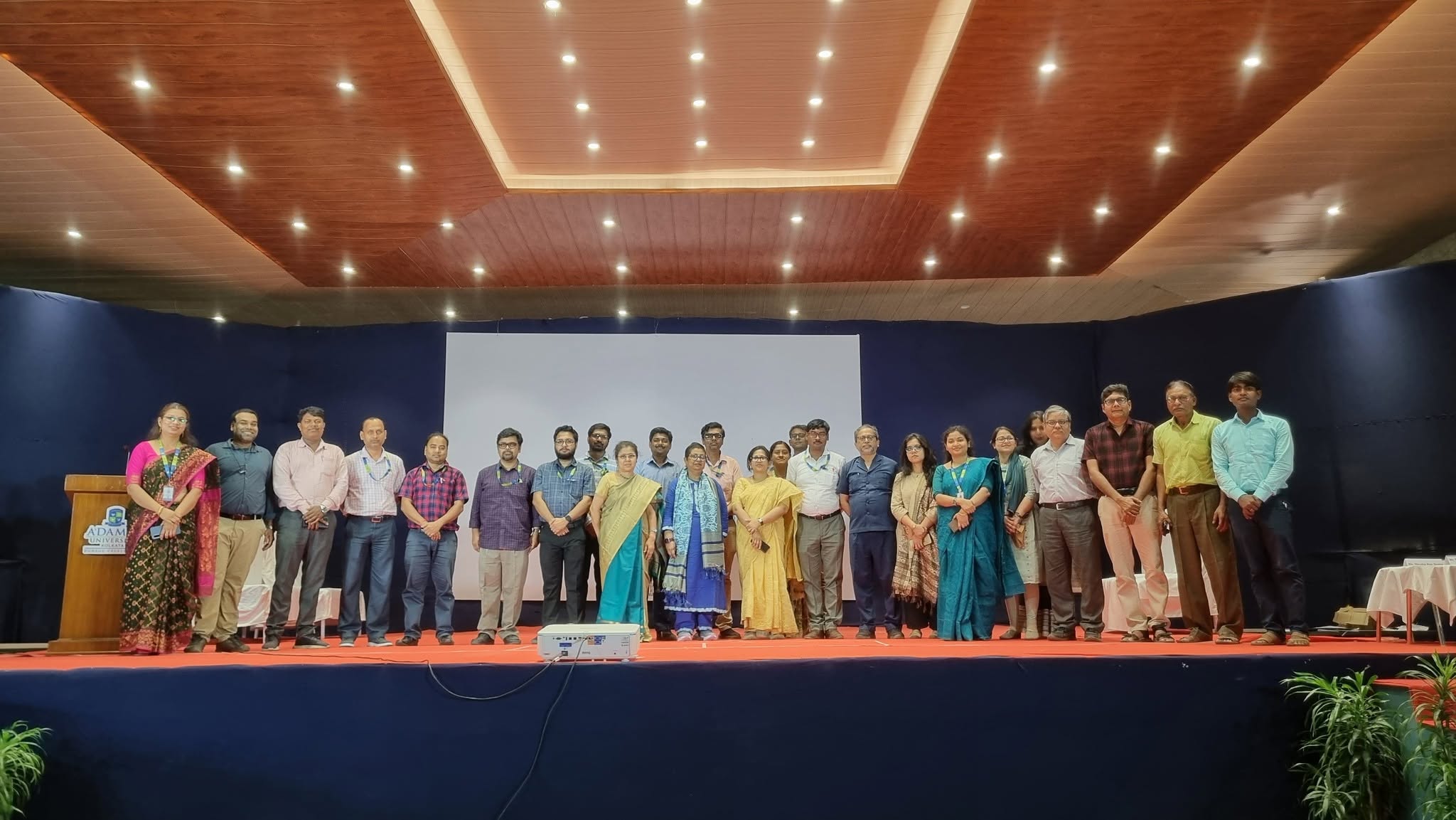
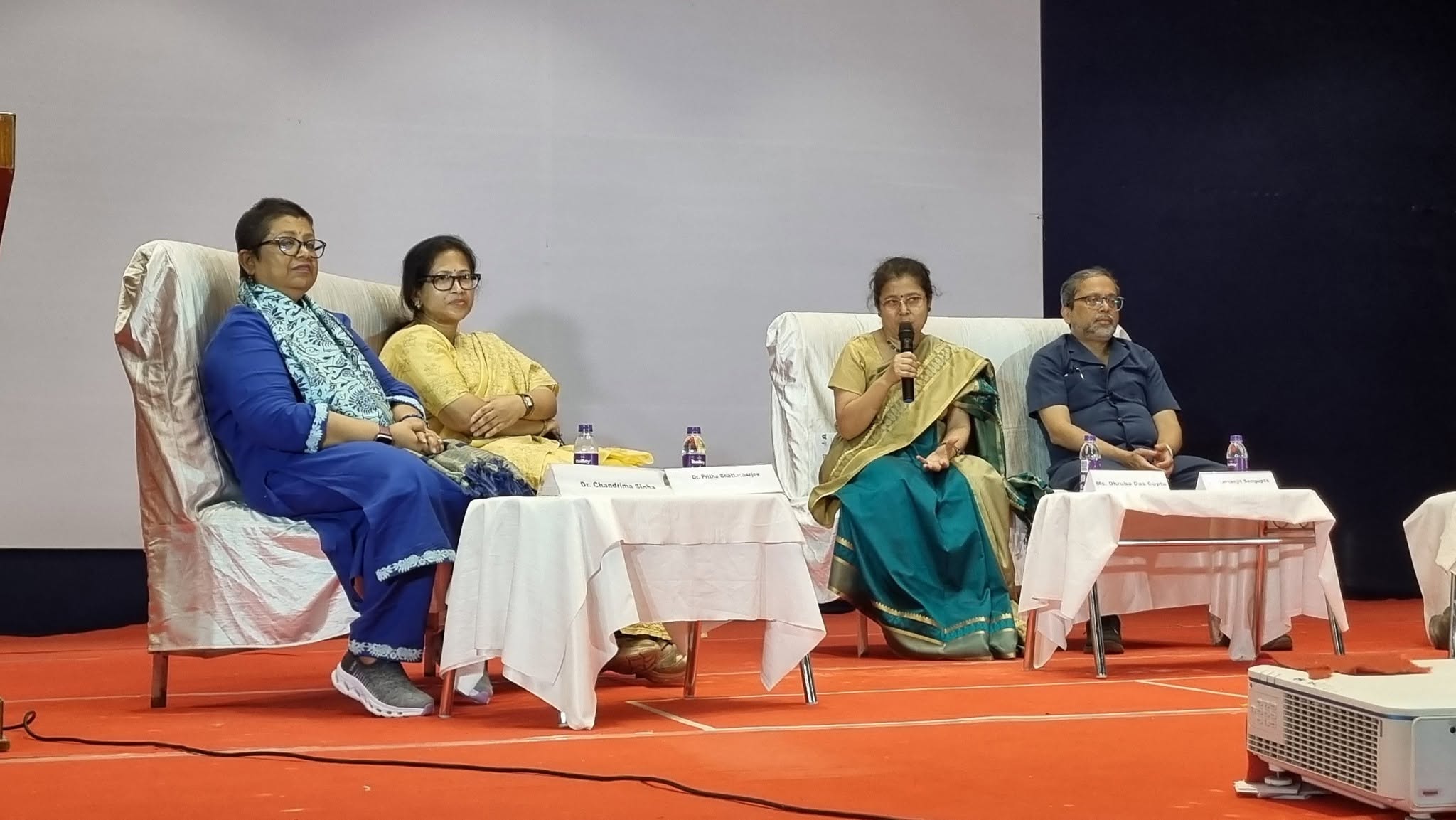
The Climate Thinker, in collaboration with Adamas University and with support from Asar Social Impact Advisors, successfully organized Biomeet–2026: Voices for Wetlands at the APJ Abdul Kalam Convention Centre, Kolkata. The conference brought together academicians, policymakers, researchers, grassroots organizations, and over 300 students to discuss wetland conservation and sustainability. The programme featured a keynote by Prof. Punarbasu Chaudhuri and a panel discussion on “Policy Starts with You,” exploring youth roles in wetland advocacy, research, and decision-making. Community organizations were also recognized for their contributions to wetland conservation. The event concluded with student poster presentations on biodiversity, pollution, climate change, and community governance, highlighting innovative ideas and reinforcing the vital role of youth and communities in protecting West Bengal’s wetlands.
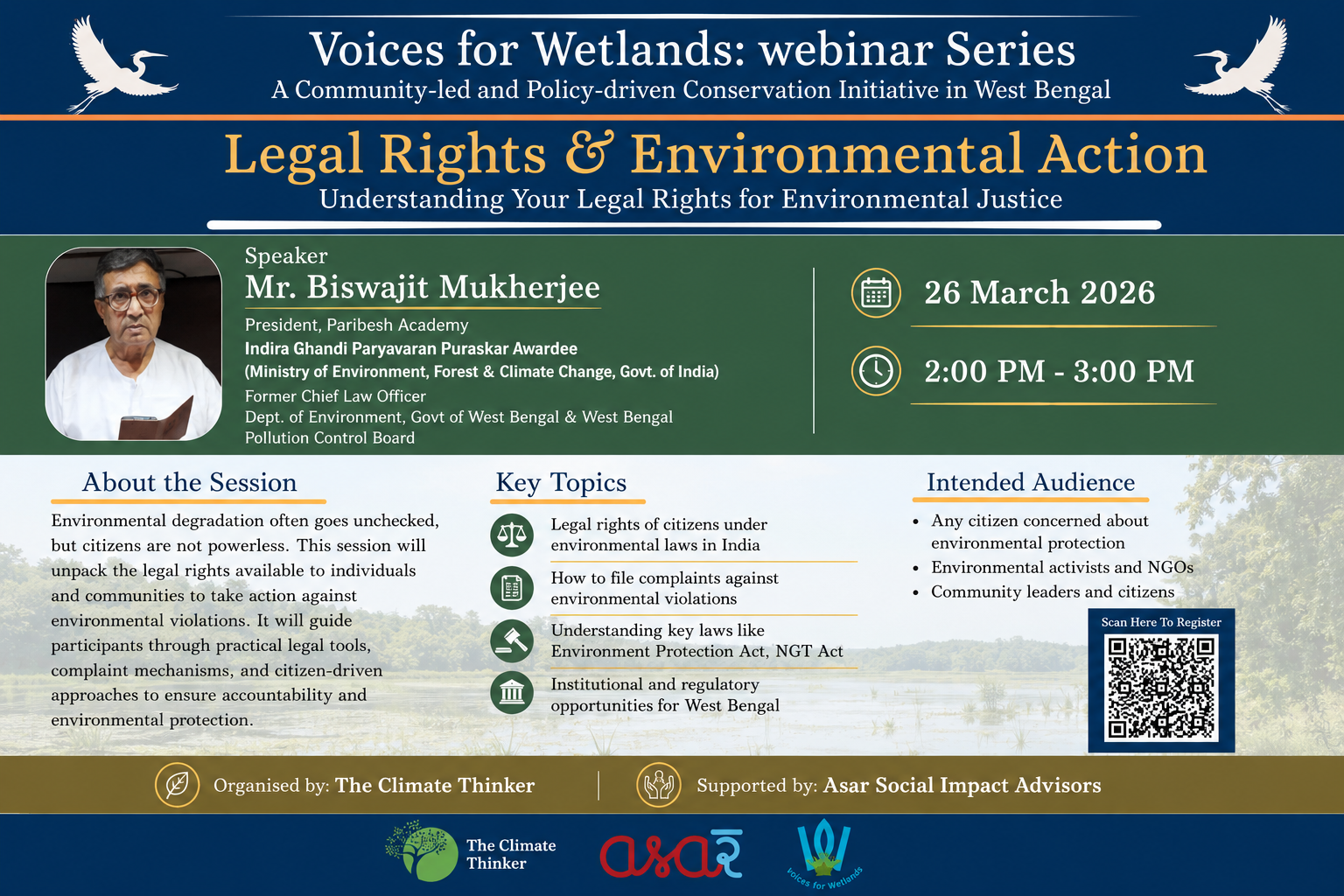
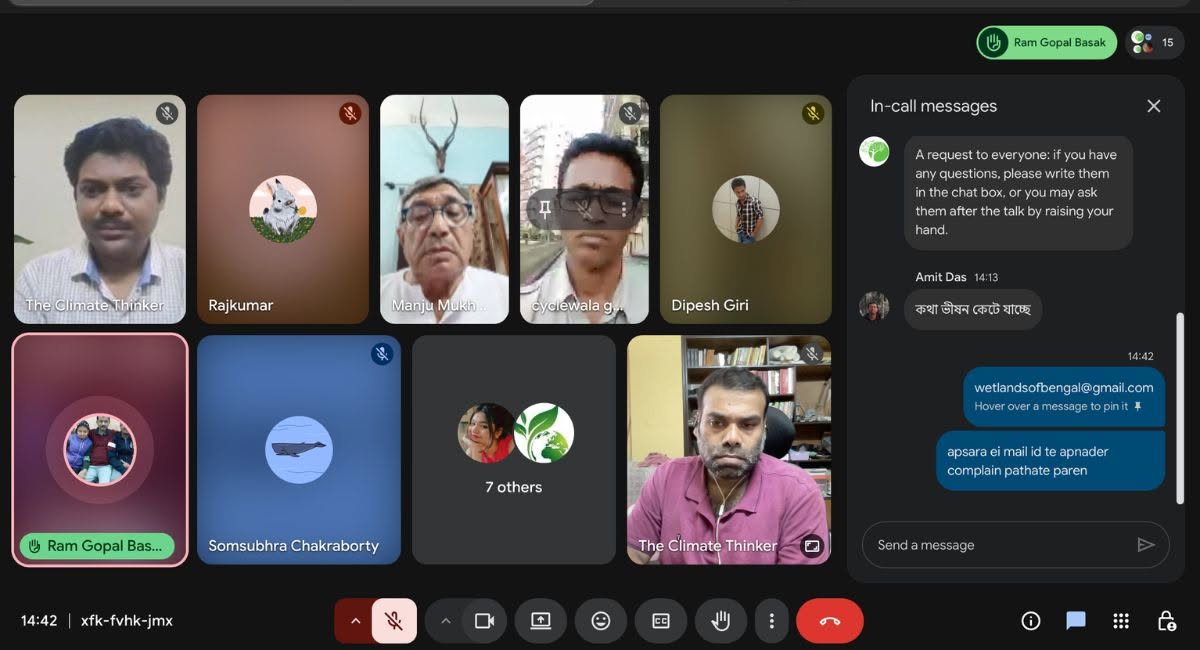
As part of our Voices for Wetlands webinar series, we hosted Biswajit Mukherjee, President of Paribesh Academy, Indira Gandhi Paryavaran Puraskar awardee, and former Chief Law Officer at the Department of Environment, Government of West Bengal, for a session on Legal Rights & Environmental Action. He explored how environmental laws in India can serve as practical tools for citizens, explaining key legislations, complaint mechanisms, and institutional pathways through real-world examples. The session also featured an engaging exchange, with participants sharing concerns, questions, and on-ground experiences, creating a meaningful discussion on how legal knowledge can support environmental action and strengthen community participation in wetland conservation.
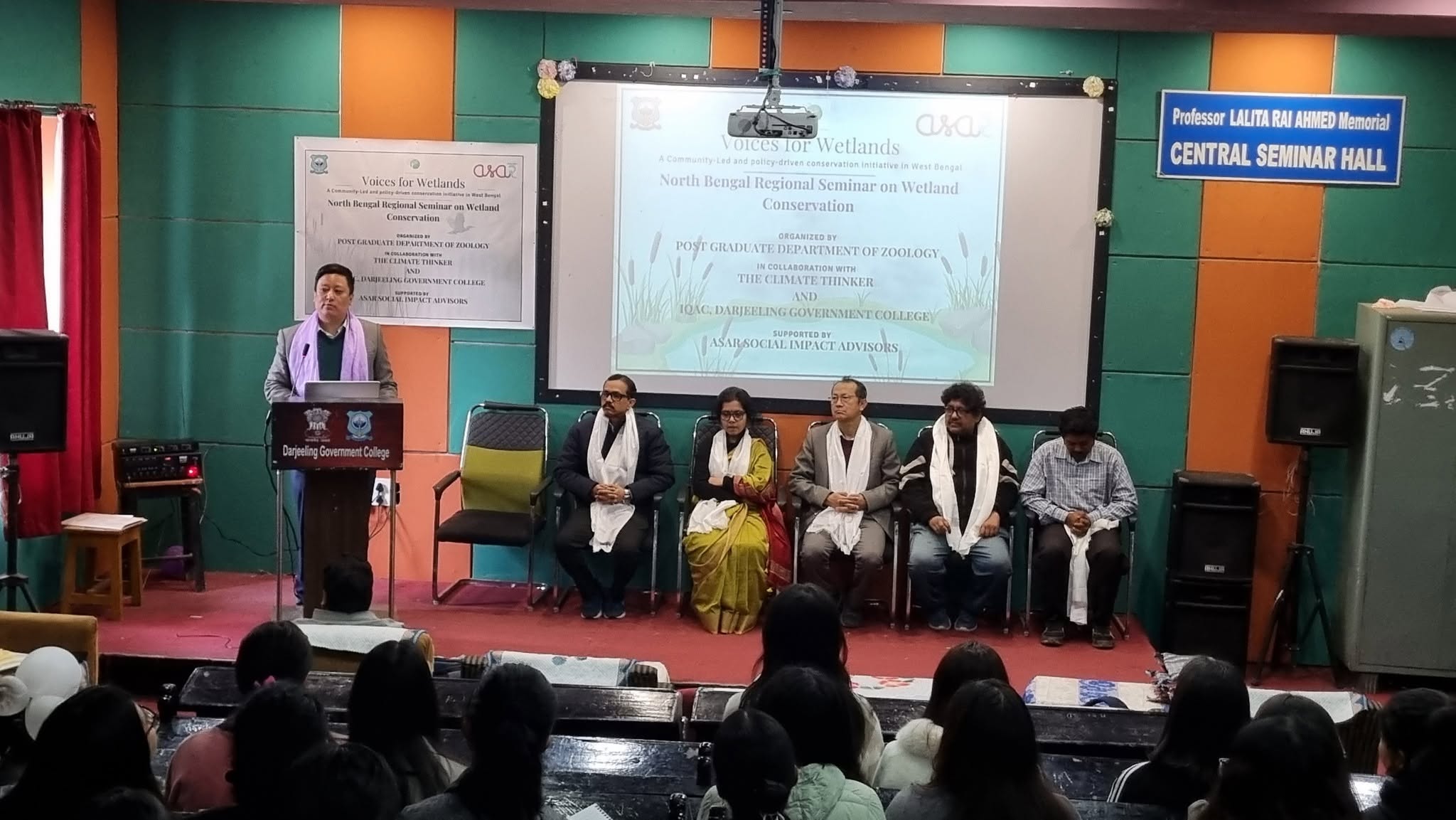
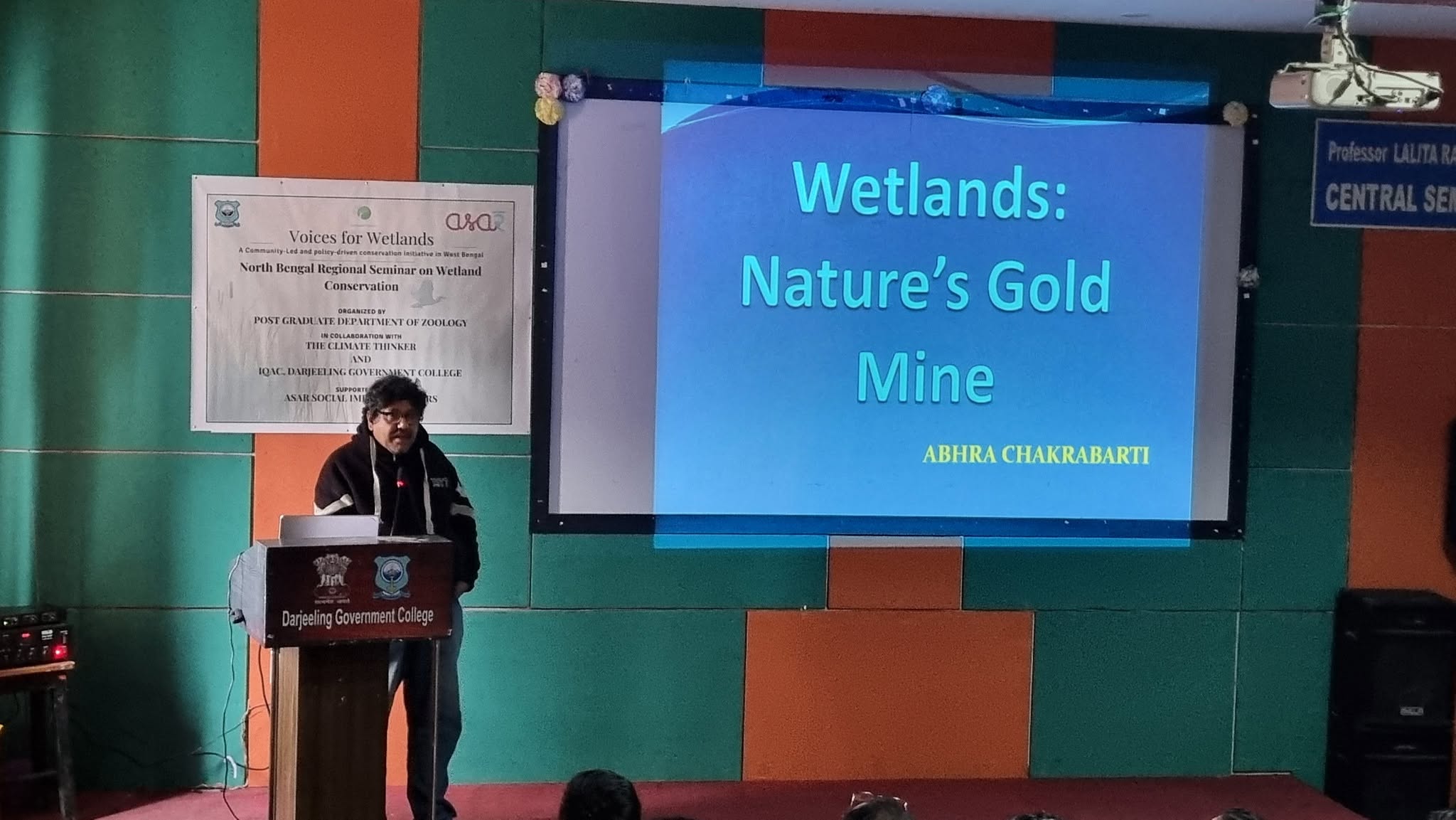
On 13th March, Darjeeling Government College hosted the North Bengal Regional Seminar on the Voices of Wetlands project, bringing together ideas around wetland conservation, biodiversity, livelihoods, and community knowledge. We presented a demo of the Voices of Wetlands platform, highlighting how local voices, field experiences, and community observations can strengthen wetland understanding and conservation. Discussions explored the vital role of wetlands in supporting fisheries, agriculture, local livelihoods, and endangered species. The second half featured student poster presentations on wetland conservation, climate resilience, and sustainable management, showcasing creativity and fresh perspectives. The seminar went beyond information sharing—it created space for dialogue, knowledge exchange, and meaningful conversations about protecting wetlands and the communities and biodiversity that depend on them.
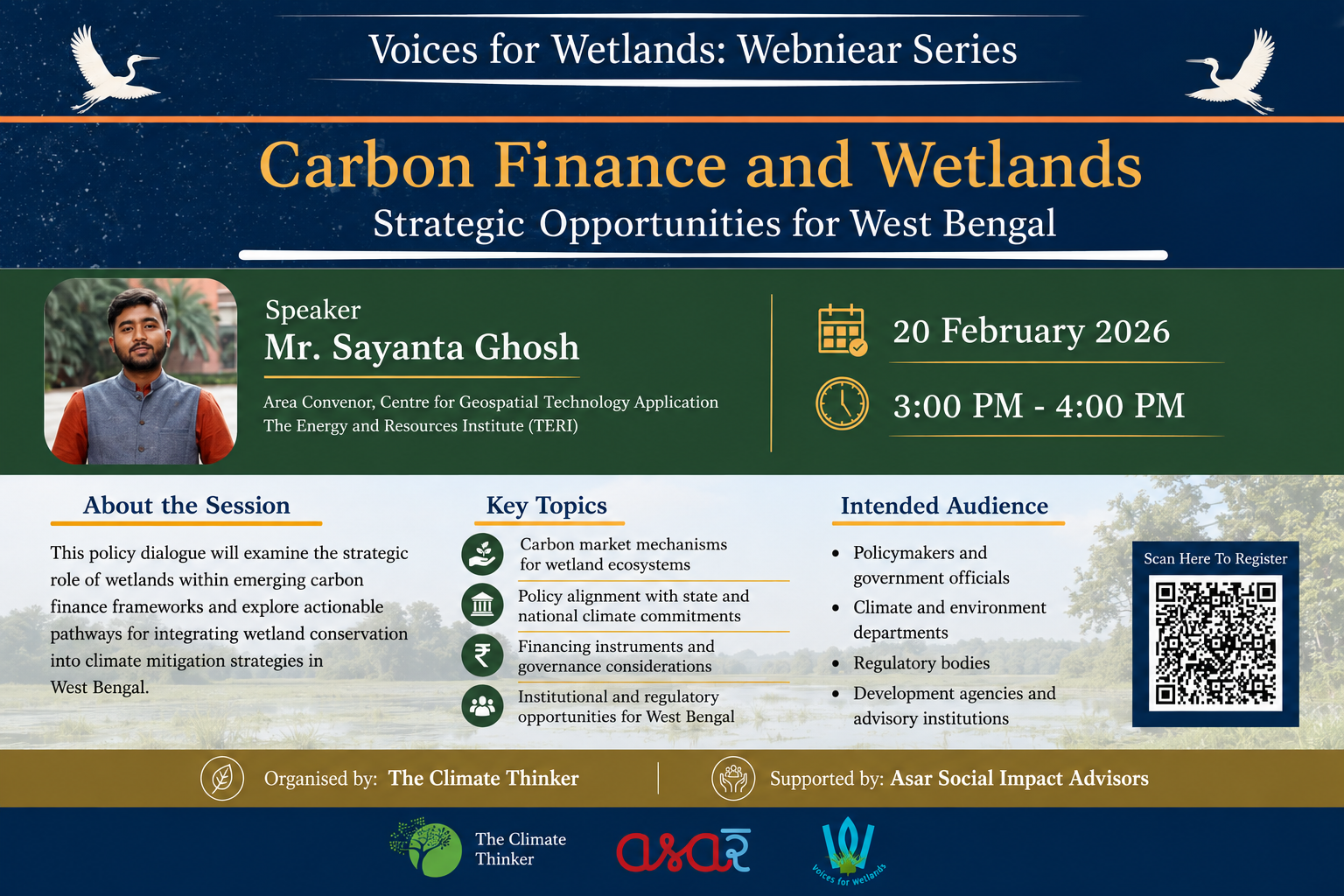
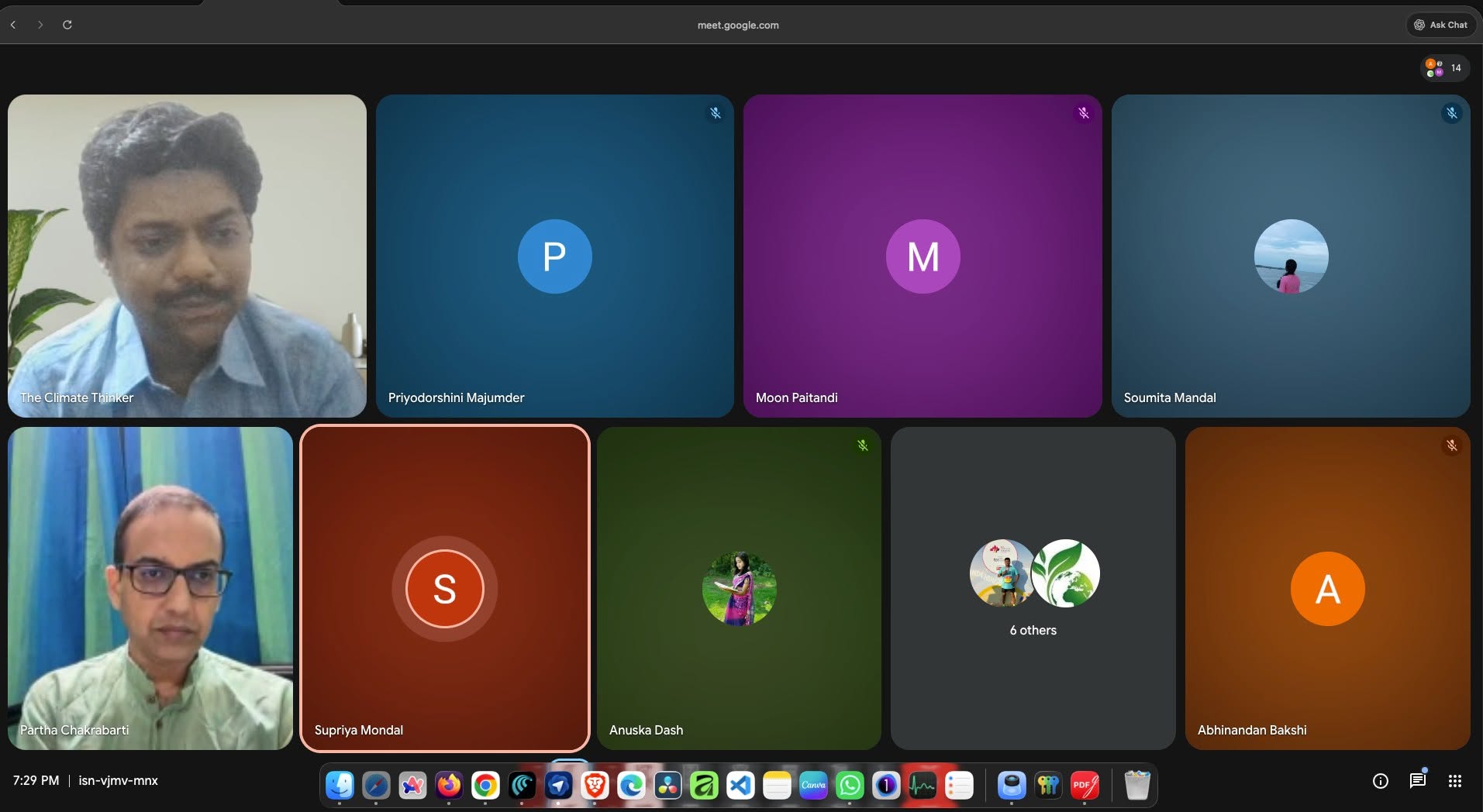
The webinar “Carbon Finance and Wetlands: Strategic Opportunities for West Bengal”, part of the Voices for Wetlands webinar series, explored the emerging role of wetlands within carbon finance and climate mitigation frameworks. Mr. Sayanta Ghosh, Area Convenor, Centre for Geospatial Technology Application, TERI, discussed carbon market mechanisms for wetland ecosystems, policy alignment with climate commitments, financing instruments, and institutional and regulatory opportunities for West Bengal. The engaging session highlighted how innovative climate finance can strengthen wetland conservation while supporting broader climate mitigation goals. We extend our heartfelt gratitude to Mr. Sayanta Ghosh for sharing his expertise and insights, and to all participants for their thoughtful engagement. Together, we continue to strengthen the conversation around wetlands, climate finance, and sustainable development.
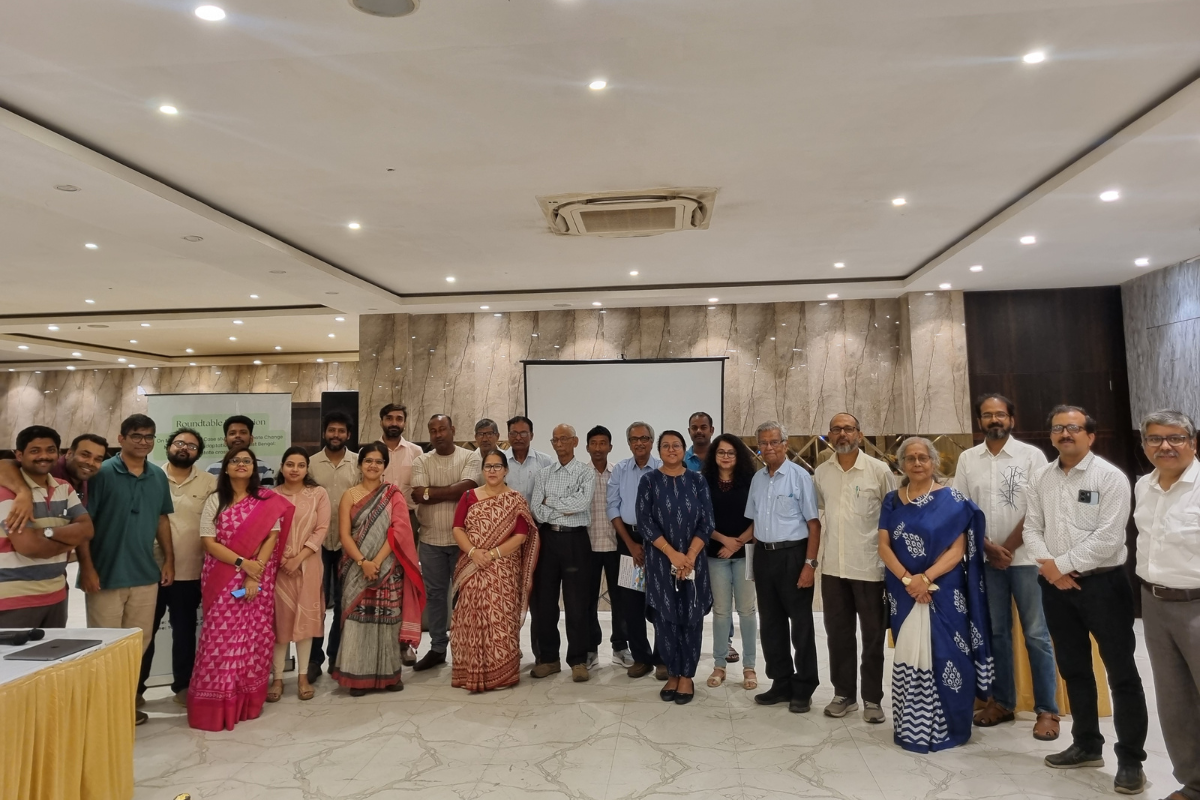
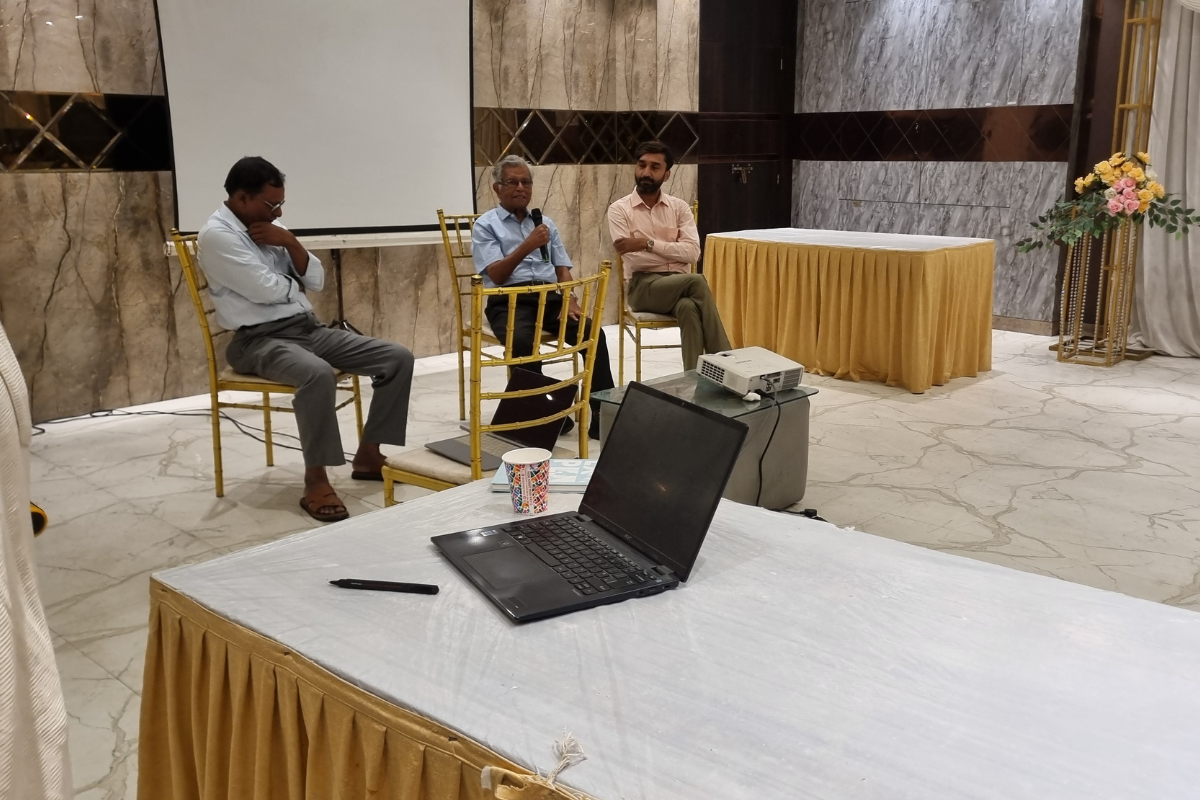
The Climate Thinker organized a Roundtable Discussion on "What Makes Development Projects Work", bringing together practitioners, CSR representatives, government officials, environmental journalists, and community leaders. The discussion explored successful case studies in organic farming, biogas, solar energy, water conservation, wetland conservation, and urban forestry, highlighting the key factors behind their long-term impact and scalability. Stakeholders directly involved in each initiative shared their experiences, challenges, and lessons learned, fostering an open and insightful exchange of ideas. The roundtable created a collaborative platform for dialogue between practitioners, policymakers, funders, and the media, encouraging knowledge sharing and strengthening partnerships for designing and implementing more effective and sustainable development projects.
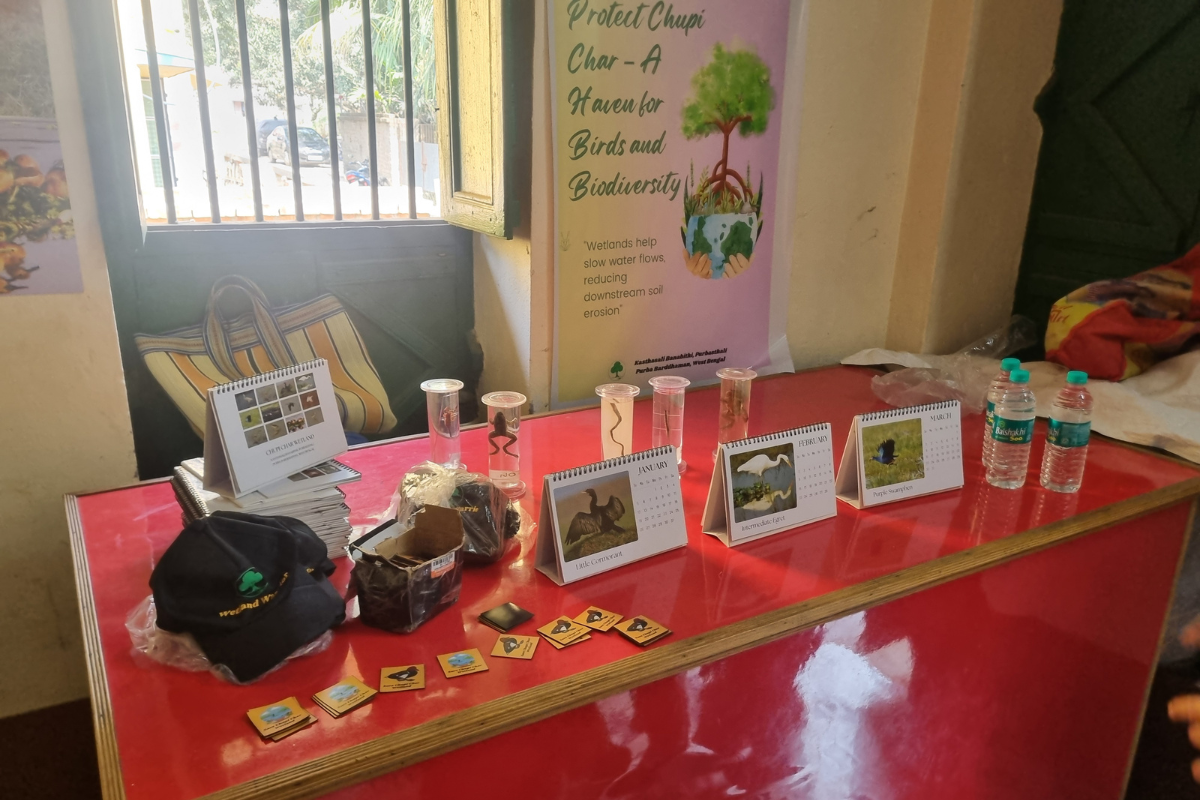
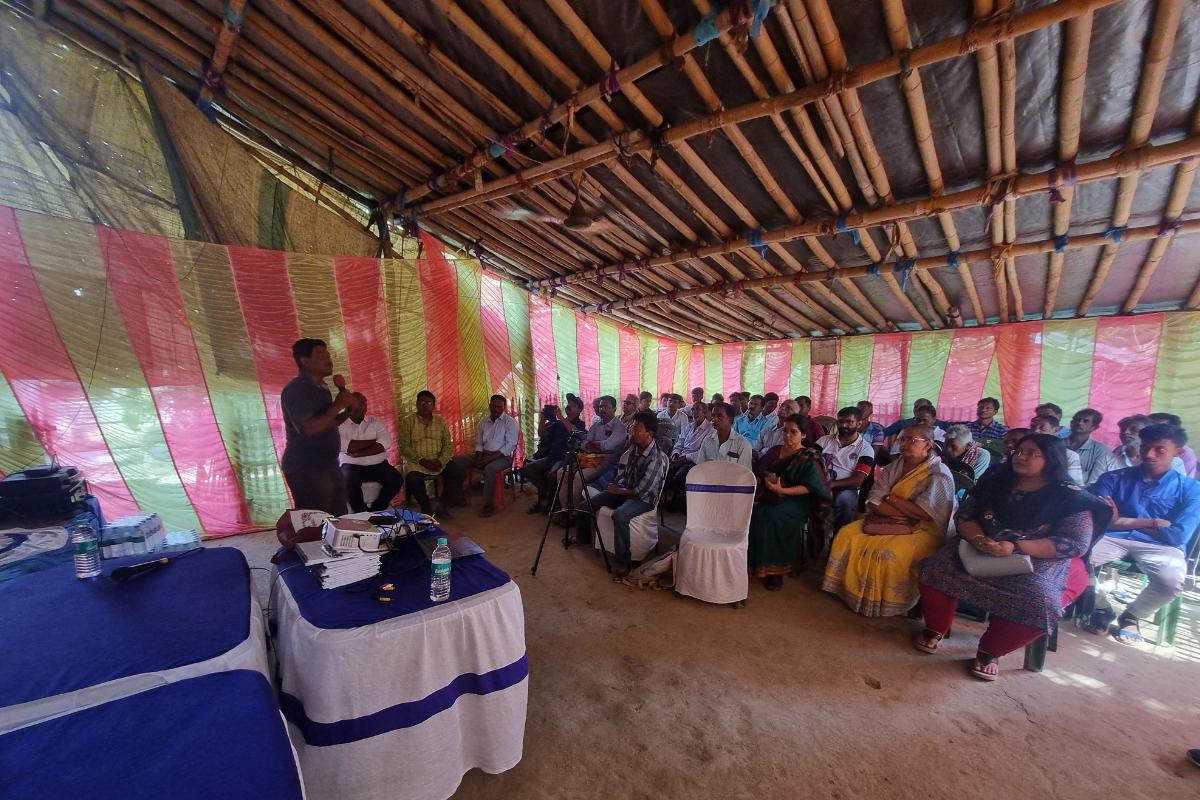
The Climate Thinker organized a Roundtable Discussion on "What Makes Development Projects Work", bringing together practitioners, CSR representatives, government officials, environmental journalists, and community leaders. The discussion explored successful case studies in organic farming, biogas, solar energy, water conservation, wetland conservation, and urban forestry, highlighting the key factors behind their long-term impact and scalability. Stakeholders directly involved in each initiative shared their experiences, challenges, and lessons learned, fostering an open and insightful exchange of ideas. The roundtable created a collaborative platform for dialogue between practitioners, policymakers, funders, and the media, encouraging knowledge sharing and strengthening partnerships for designing and implementing more effective and sustainable development projects.
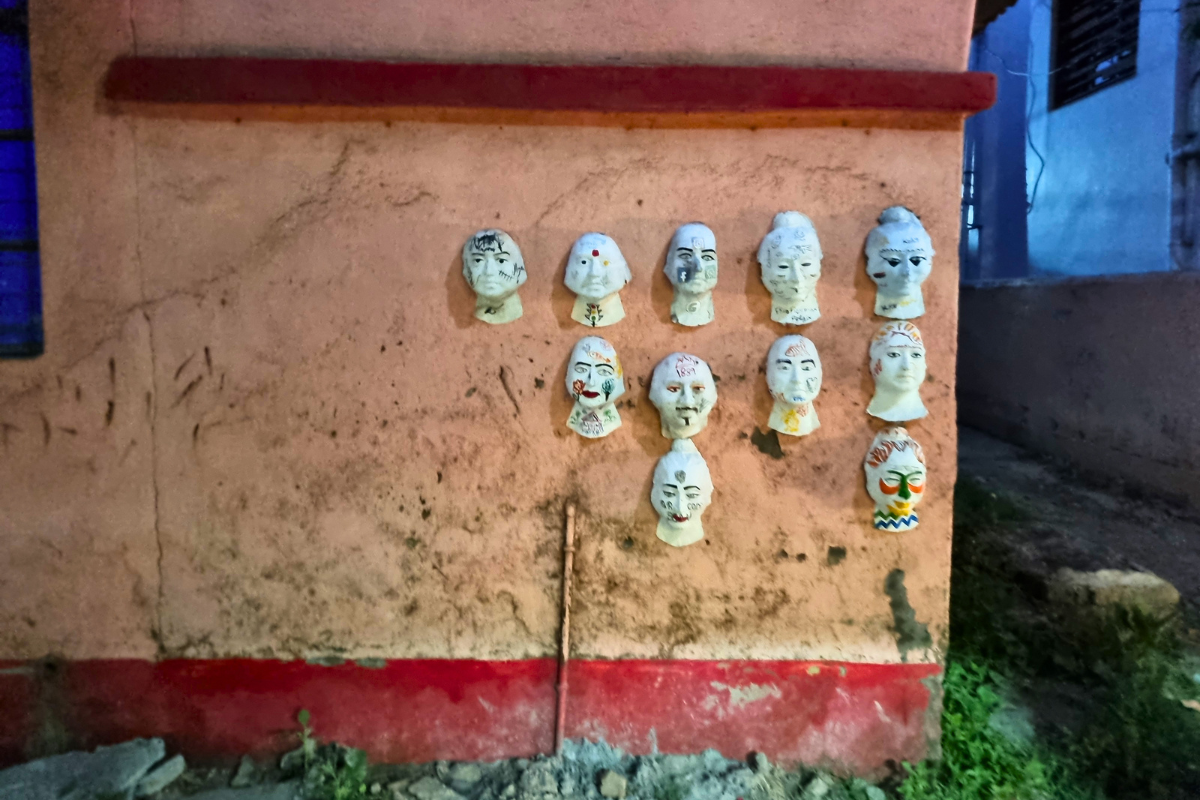
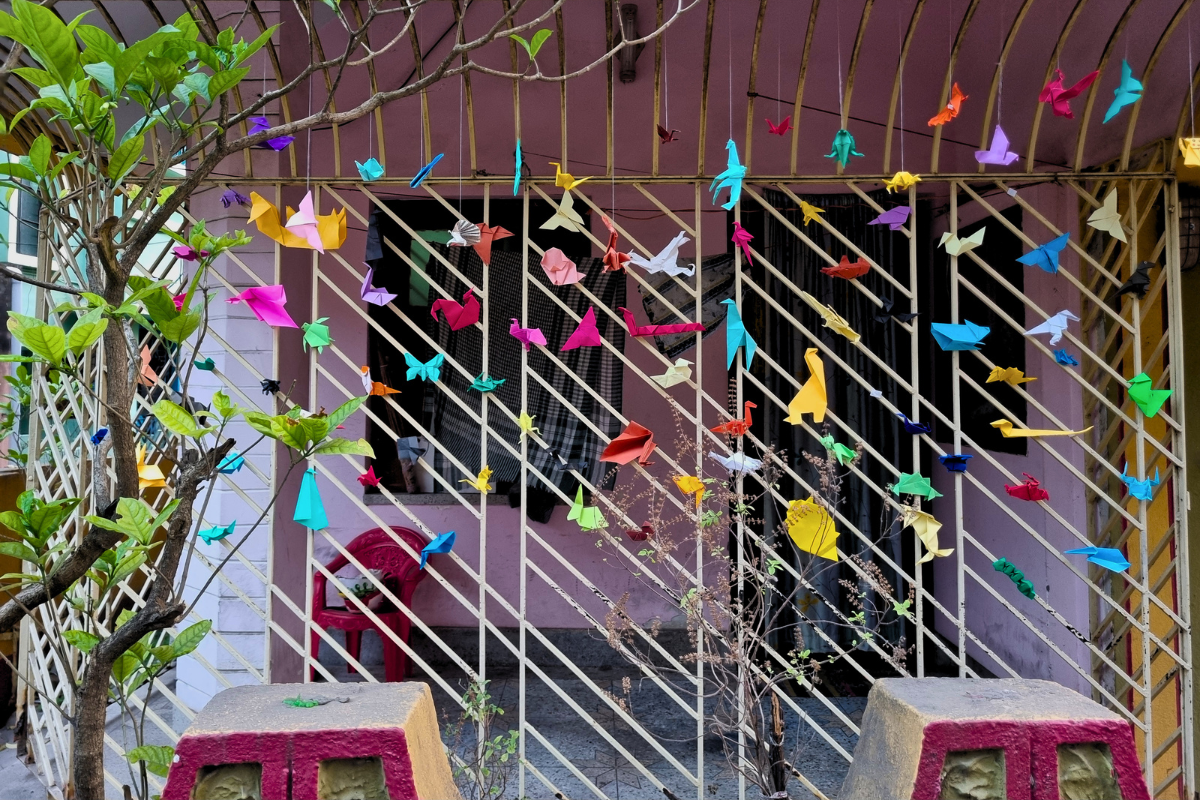
For the third consecutive year, The Climate Thinker participated in the Kolkata Climate Fair during Borale Bosonto in April, in collaboration with artist Samir Rana and Akriti School of Art. The event featured a series of climate-themed art installations designed to spark curiosity and inspire meaningful conversations about climate change. Through creative visual storytelling, the installations encouraged visitors to reflect on pressing environmental challenges and consider the role individuals and communities can play in building a sustainable future. People of all ages engaged with the artworks, shared their perspectives, and participated in discussions, making climate awareness more interactive and accessible. By combining art with environmental communication, the initiative continued to demonstrate the power of creativity in fostering public awareness and inspiring collective climate action.
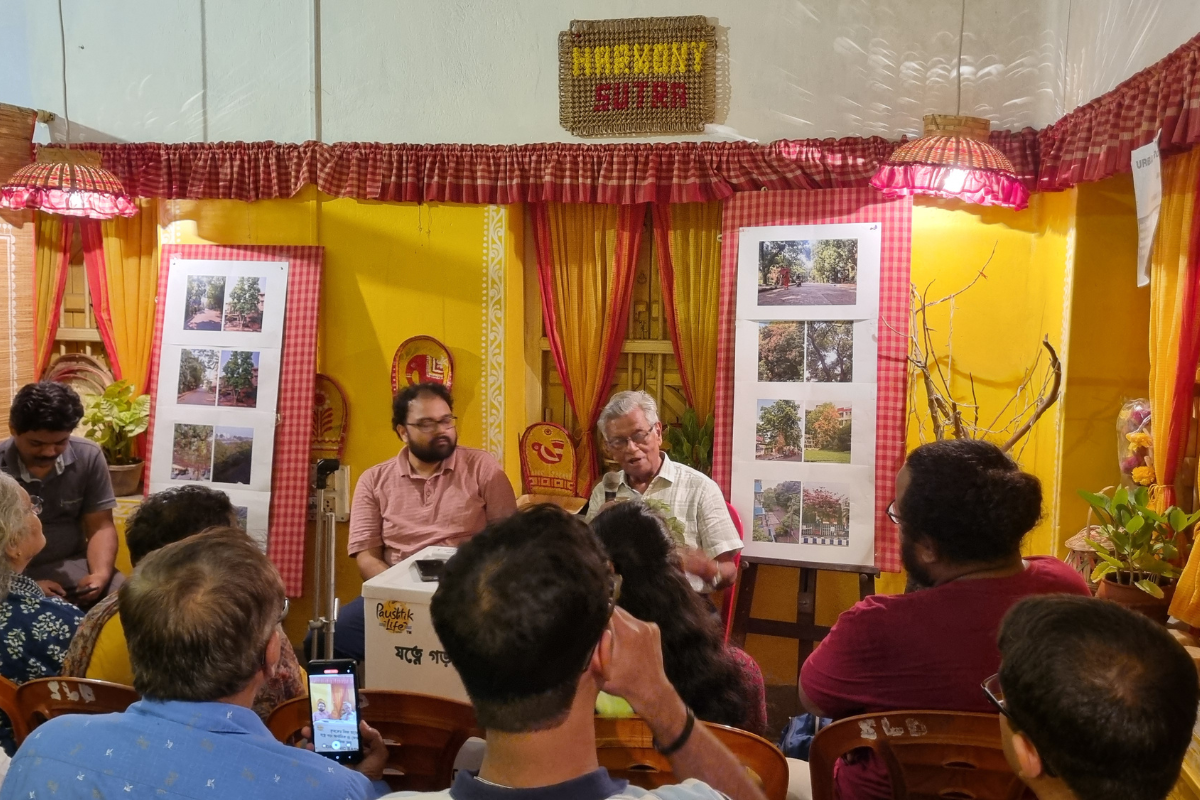
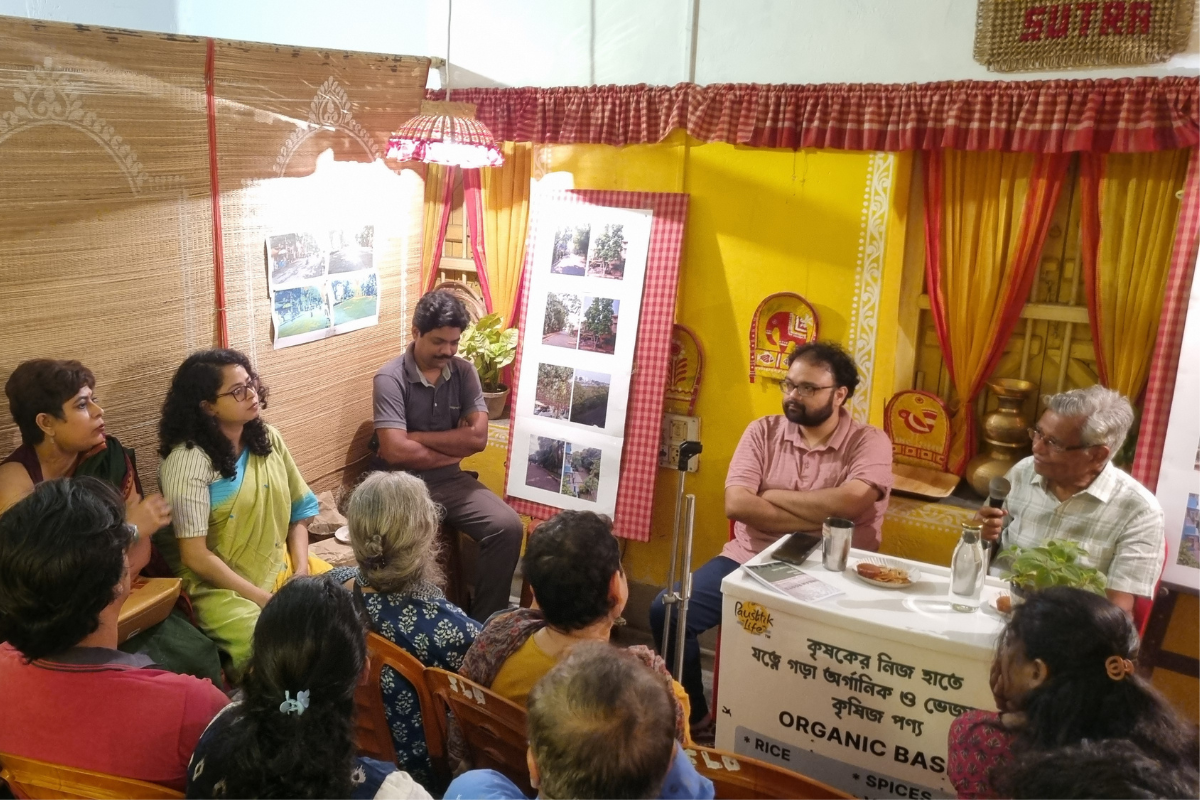
The Climate Thinker organized Urban Roots, an event dedicated to promoting urban forestry and sustainable urban landscapes. The programme marked the launch of the Urban Forestry Guidebook authored by Dr. Asit Lahiri, providing a practical resource for individuals and organizations working towards greener cities. The event brought together social workers, NGO representatives, CSR funders, climate activists, and environmental practitioners for an engaging discussion on the importance of urban forests in addressing climate change, biodiversity loss, and urban heat. The interactive session encouraged participants to exchange ideas, share experiences, and explore opportunities for collaboration in expanding urban green spaces. The event successfully fostered meaningful dialogue and strengthened networks among stakeholders committed to building more resilient and sustainable cities.
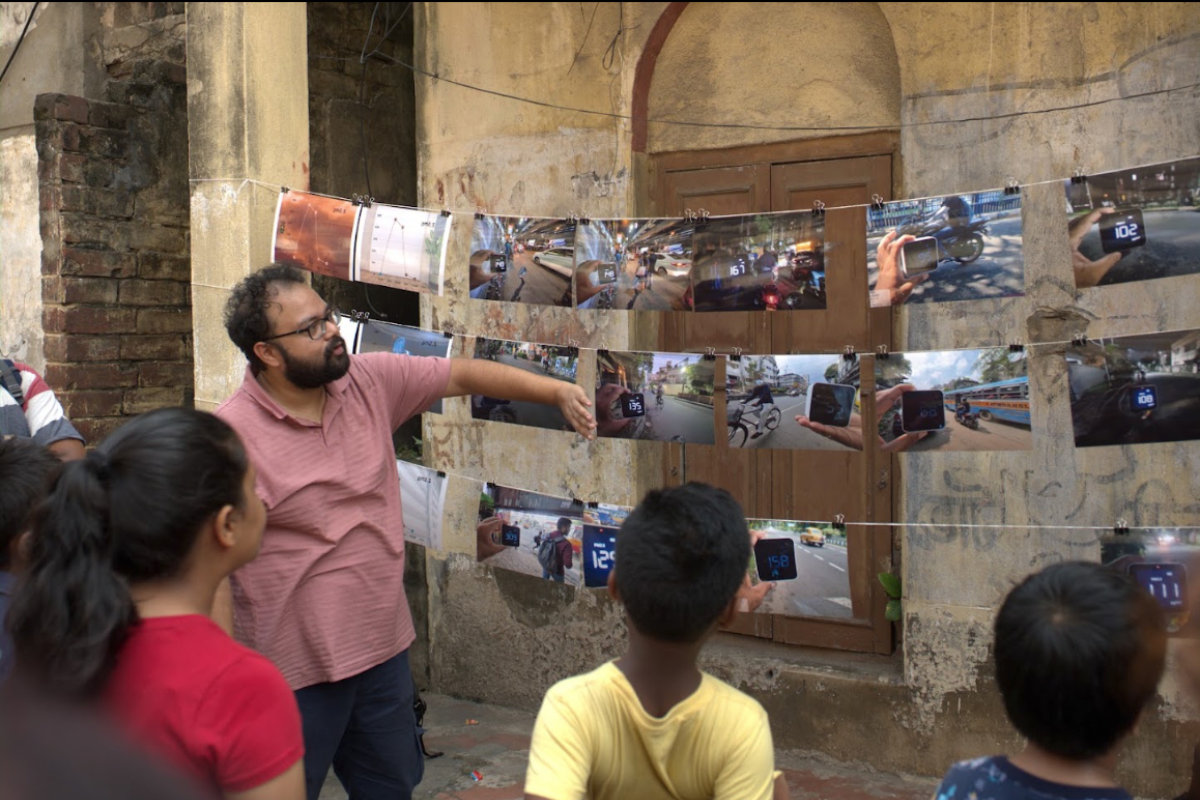
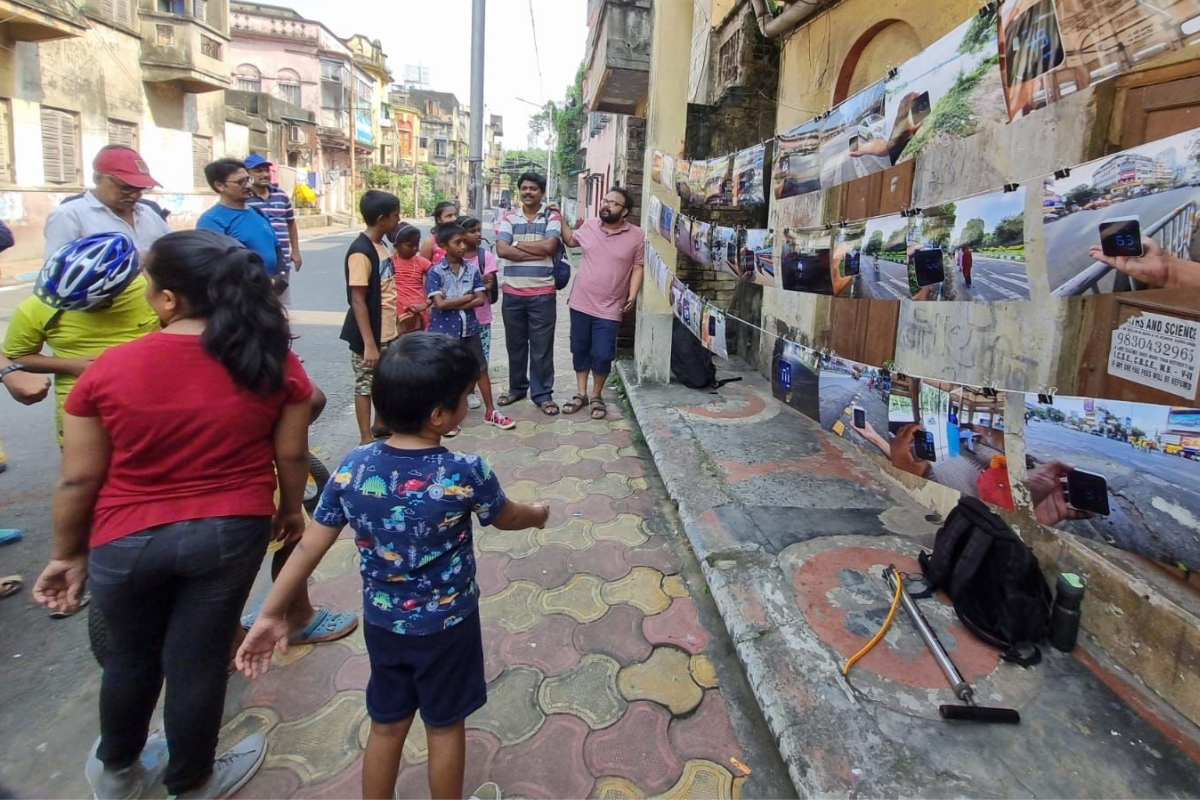
The Climate Thinker organized a Street Exhibition on Air Quality at Gouri Bari Lane to raise public awareness about the causes, impacts, and solutions to air pollution. The exhibition featured a compelling collection of photographs highlighting pollution sources, their effects on health and the environment, and the importance of clean air. Displayed in a public space, the exhibition attracted local residents, commuters, and visitors, encouraging them to engage with the visuals and discuss air quality issues. By bringing scientific and environmental messages into the community through photography, the initiative made air pollution more relatable and accessible. The exhibition served as an effective platform for promoting public awareness and inspiring community dialogue on the need for cleaner air.s..
For the second consecutive year, The Climate Thinker participated in the Kolkata Climate Fair during Borale Bosonto in April, in collaboration with artist Samir Rana and Akriti School of Art. The event featured a series of climate-themed art installations designed to spark curiosity and inspire meaningful conversations about climate change. Through creative visual storytelling, the installations encouraged visitors to reflect on pressing environmental challenges and consider the role individuals and communities can play in building a sustainable future. People of all ages engaged with the artworks, shared their perspectives, and participated in discussions, making climate awareness more interactive and accessible. By combining art with environmental communication, the initiative continued to demonstrate the power of creativity in fostering public awareness and inspiring collective climate action.
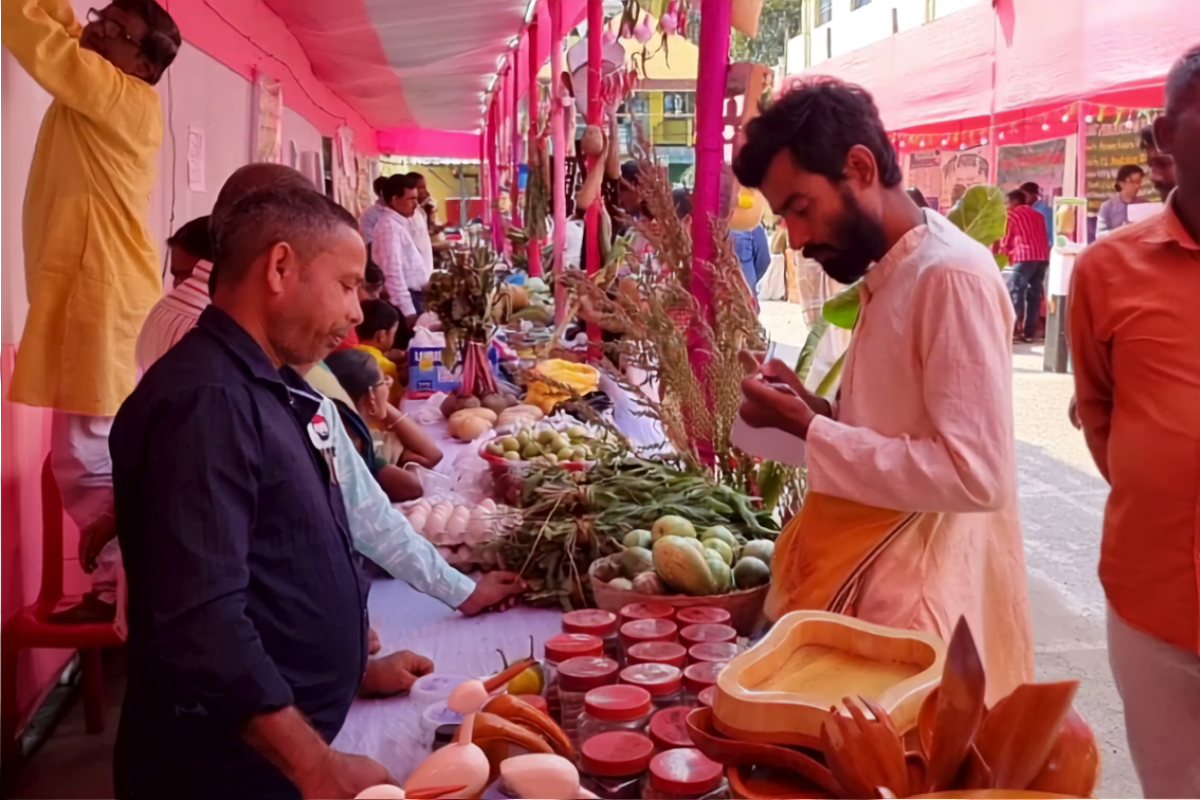
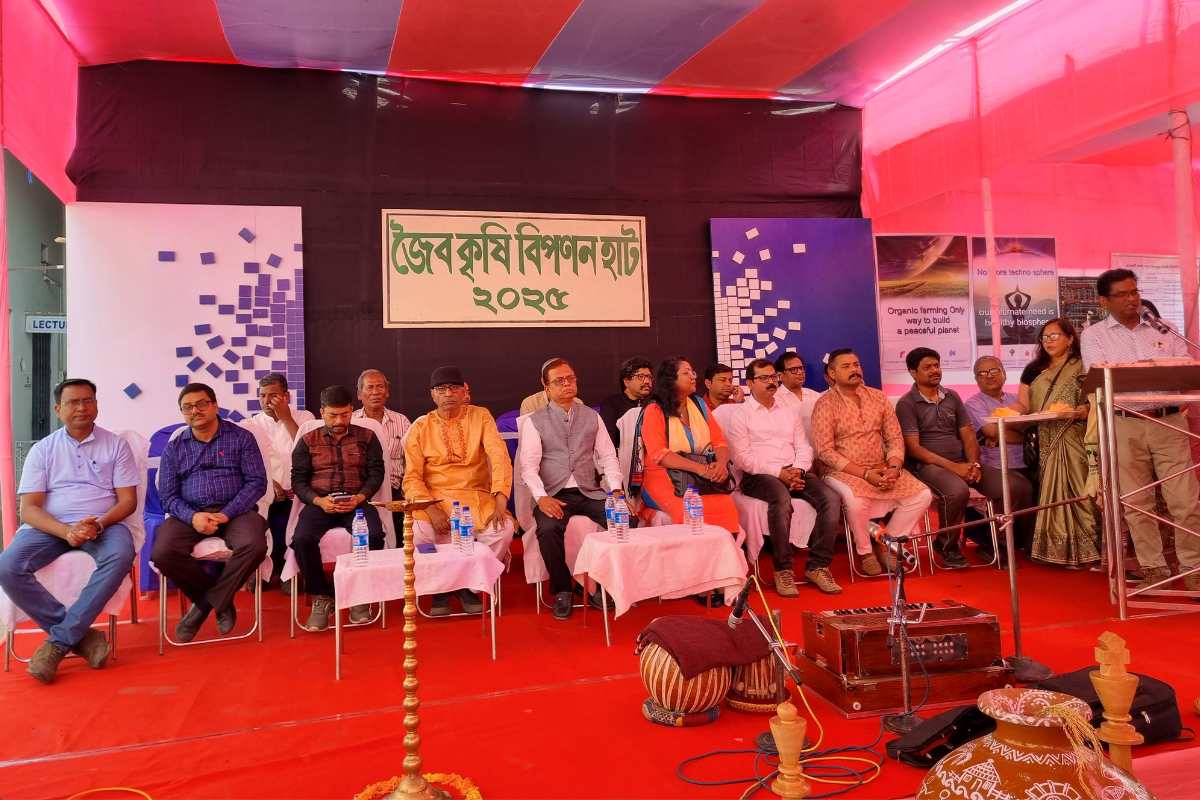
The Climate Thinker participated in the Raiganj Organic Farmers' Fair, a two-day event that brought together organic farmers, Farmer Producer Organizations (FPOs), and agricultural stakeholders from across India. The fair provided a platform for knowledge exchange, networking, and promoting sustainable farming practices. Interactive group discussions focused on the challenges, opportunities, and future of organic farming, with active participation from farmers, government stakeholders, and experts. Officials from the Department of Agriculture shared valuable insights on policies, support mechanisms, and the way forward for strengthening organic agriculture. The event also featured exhibition stalls showcasing a diverse range of organic products and sustainable farming initiatives by farmers and FPOs from different regions, fostering collaboration and encouraging the adoption of environmentally responsible agricultural practices.
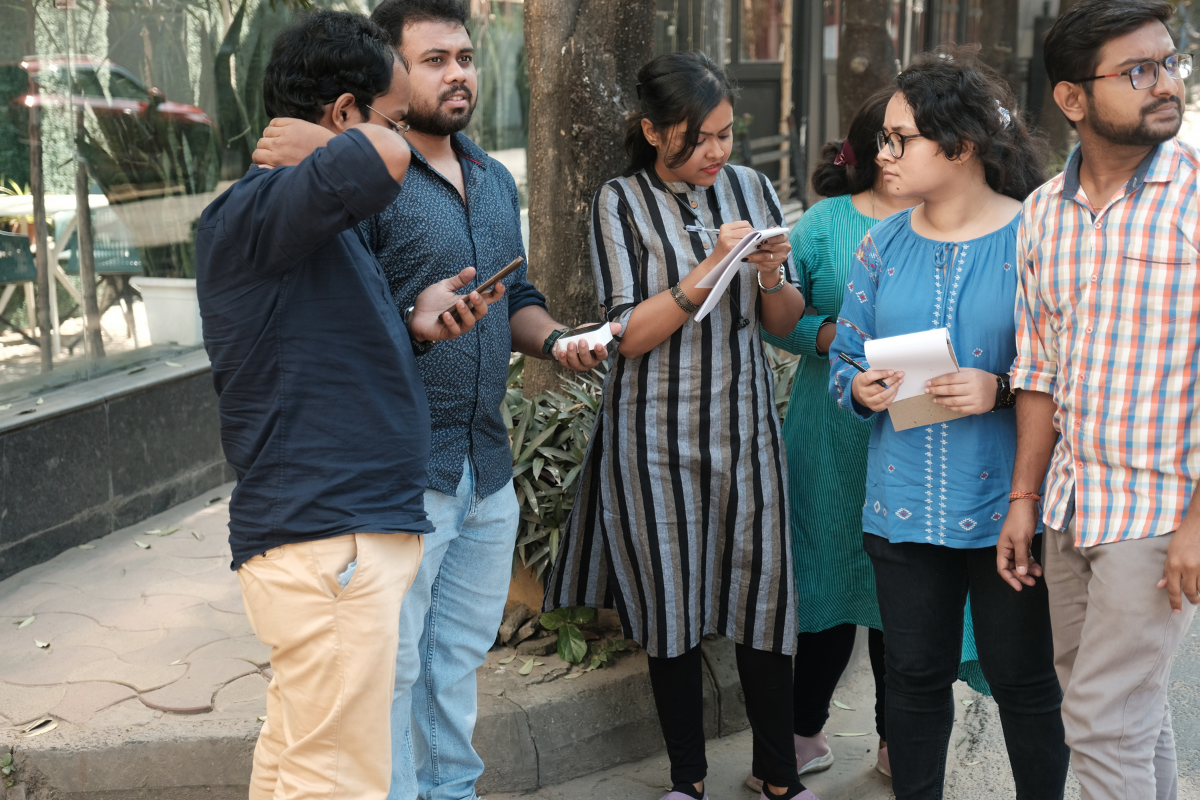
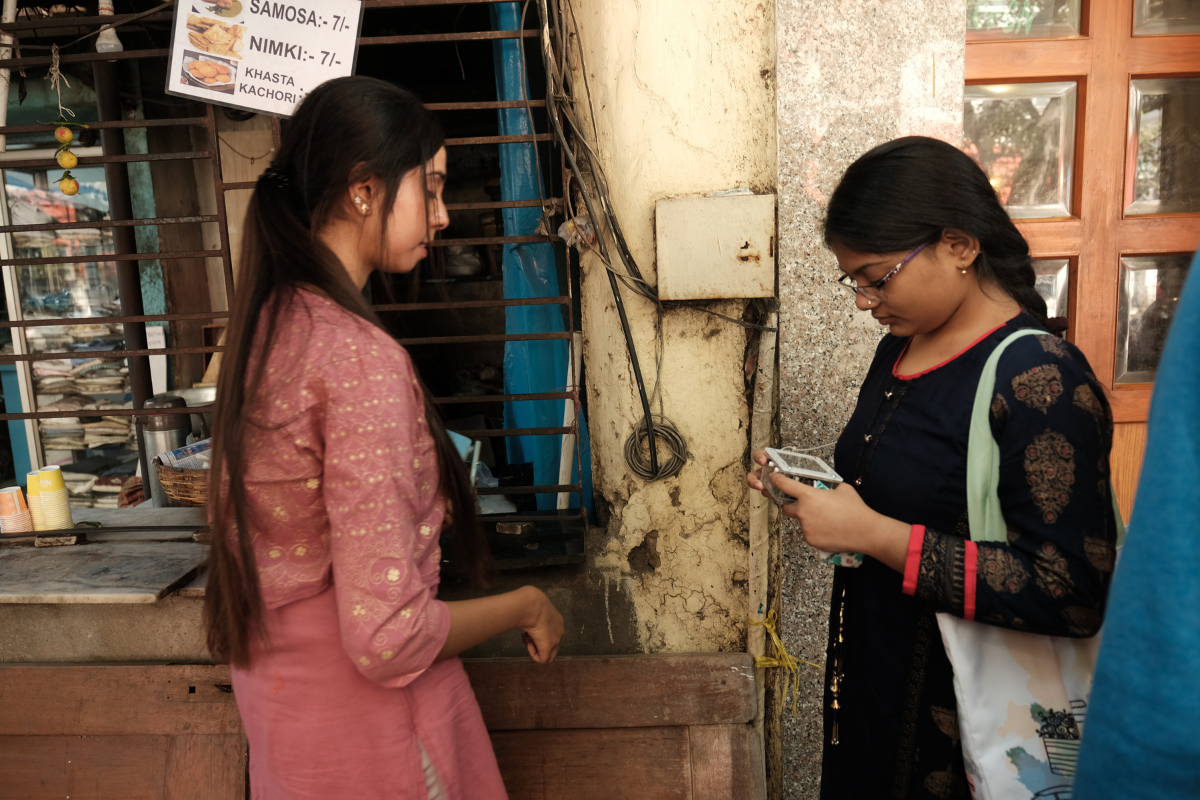
The Climate Thinker organized a Capacity Building Workshop on Air Pollution to train citizen scientists in understanding and addressing urban air pollution. The four-day program combined expert-led lectures with practical sessions on air quality monitoring, PM2.5 mapping, emission inventory development, ozone monitoring, indoor air pollution, and pollution source identification. A total of 23 participants from academia, NGOs, and the private sector took part in pollution walks, field surveys, and hands-on demonstrations using monitoring tools. Pre- and post-workshop assessments showed improved knowledge and critical thinking on air pollution issues. More than 95% of participants rated the workshop five stars, highlighting its practical approach and relevance. The workshop strengthened participants' capacity to contribute to clean air advocacy and community-based environmental action.
For the second consecutive year, The Climate Thinker participated in the Kolkata Climate Fair during Borale Bosonto in April, in collaboration with artist Samir Rana and Akriti School of Art. The event featured a series of climate-themed art installations designed to spark curiosity and inspire meaningful conversations about climate change. Through creative visual storytelling, the installations encouraged visitors to reflect on pressing environmental challenges and consider the role individuals and communities can play in building a sustainable future. People of all ages engaged with the artworks, shared their perspectives, and participated in discussions, making climate awareness more interactive and accessible. By combining art with environmental communication, the initiative continued to demonstrate the power of creativity in fostering public awareness and inspiring collective climate action.
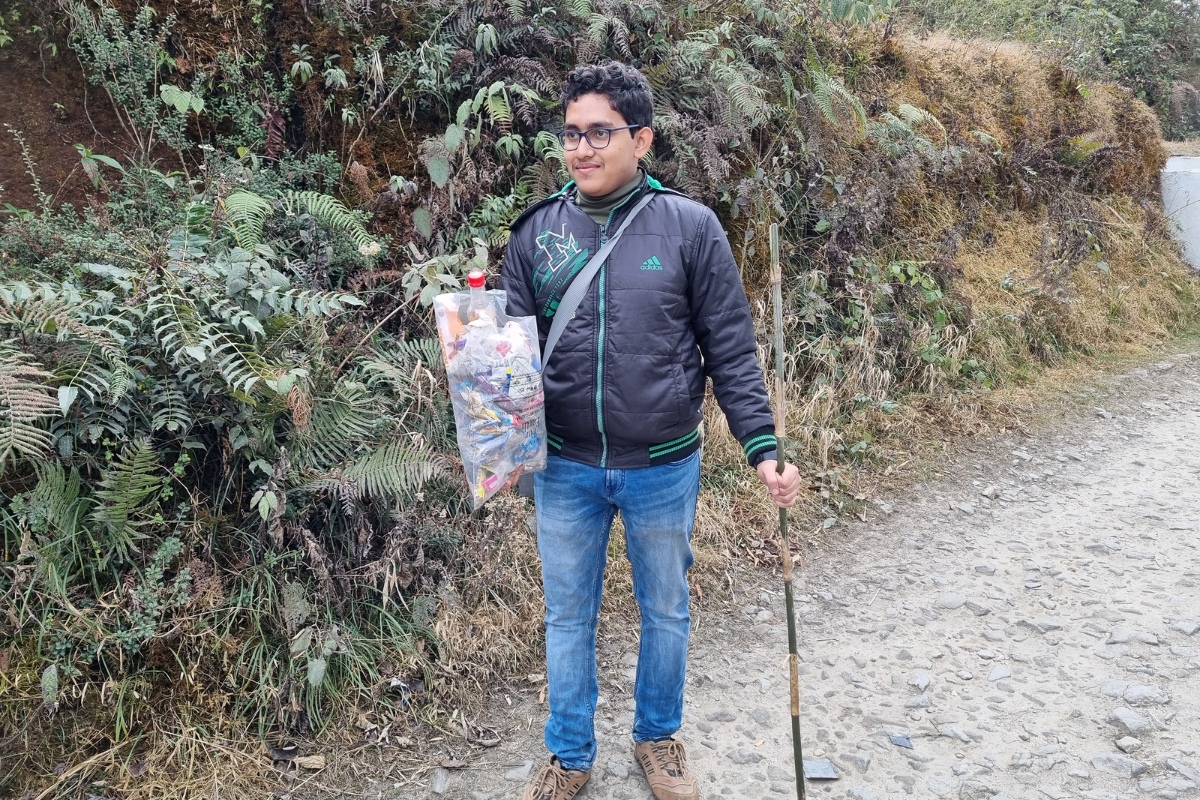
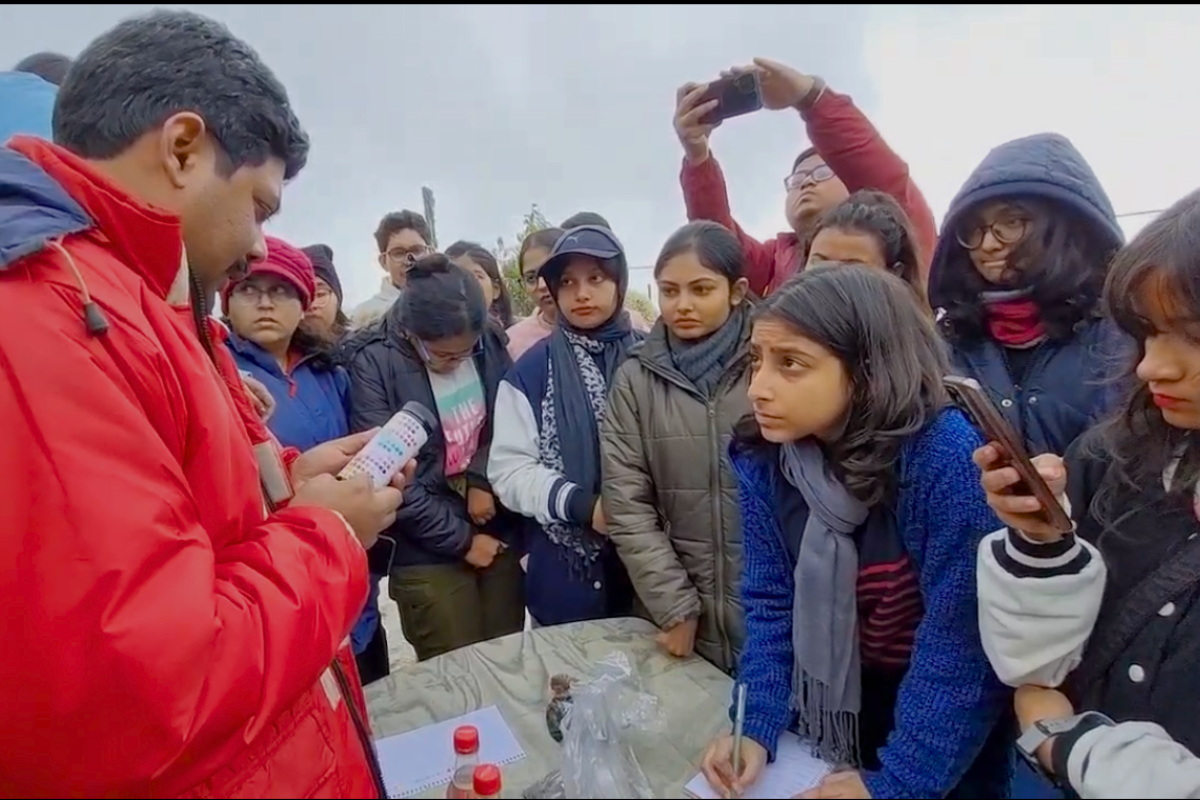
The Climate Thinker organized an educational excursion to Chatakpur for 35 students from Adamas University, providing them with an immersive learning experience in the Himalayan ecosystem. The excursion focused on biodiversity conservation, where students explored the region's rich flora and gained practical knowledge of plant species identification. Through guided nature walks and interactive discussions, participants learned about forest ecosystems, the importance of native biodiversity, and the challenges of conservation in fragile mountain landscapes. The field visit bridged classroom learning with real-world observations, encouraging students to develop ecological awareness and a deeper appreciation for nature. The excursion served as a valuable hands-on learning opportunity, inspiring participants to become more environmentally conscious and engaged in biodiversity conservation.
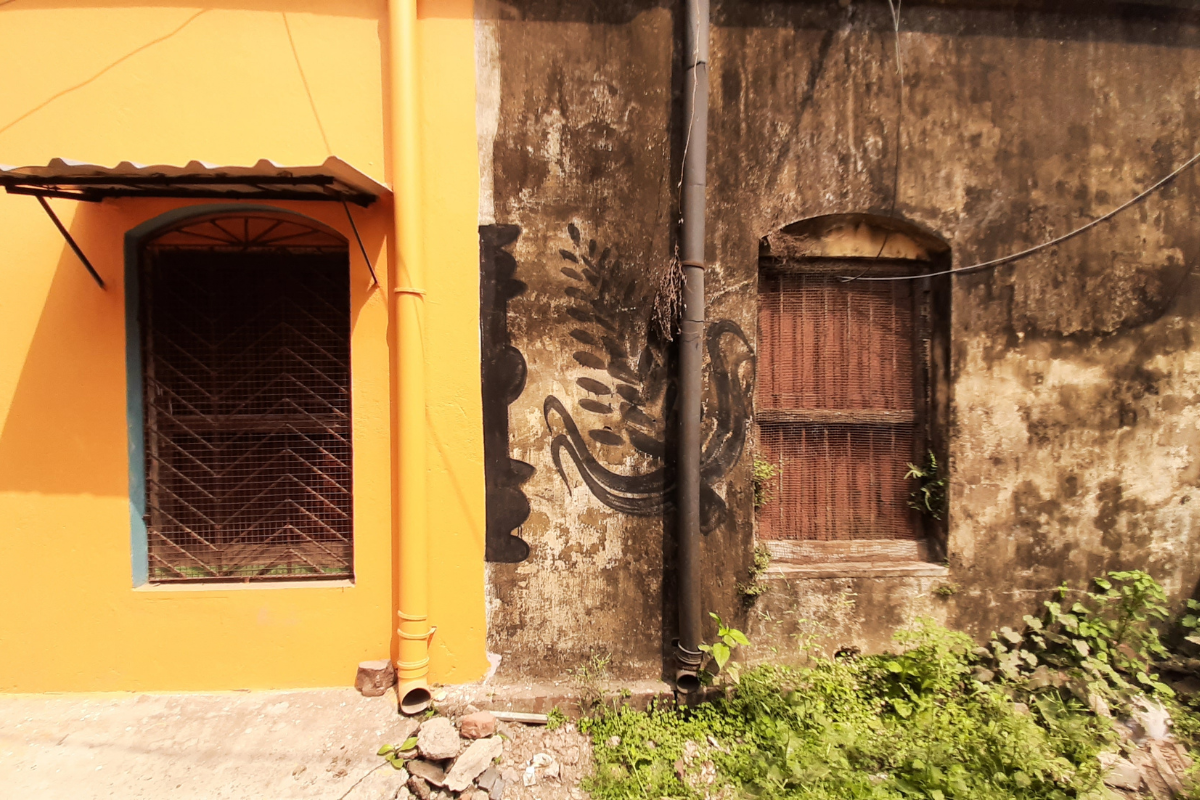
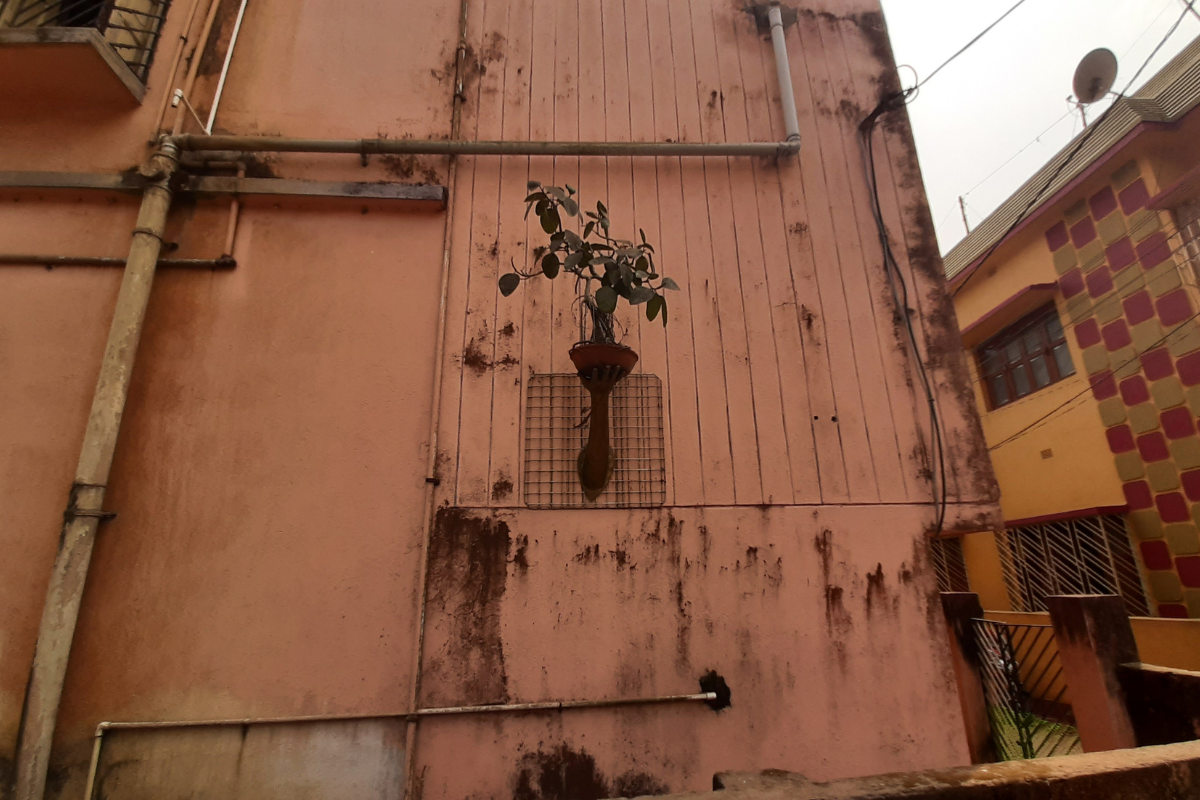
The Climate Thinker participated in the Kolkata Climate Fair during Borale Bosonto in April in collaboration with artist Samir Rana and Akriti School of Art. The event featured a series of climate-themed art installations designed to engage the public and encourage conversations around climate change. By transforming environmental issues into creative visual experiences, the installations invited visitors to reflect on the impacts of climate change and discuss possible solutions. People of all ages interacted with the artworks, shared their perspectives, and participated in meaningful discussions, making climate awareness more accessible and relatable. The initiative highlighted the power of art as a tool for environmental communication and community engagement, taking a small but meaningful step toward inspiring greater public awareness and collective action on climate change.
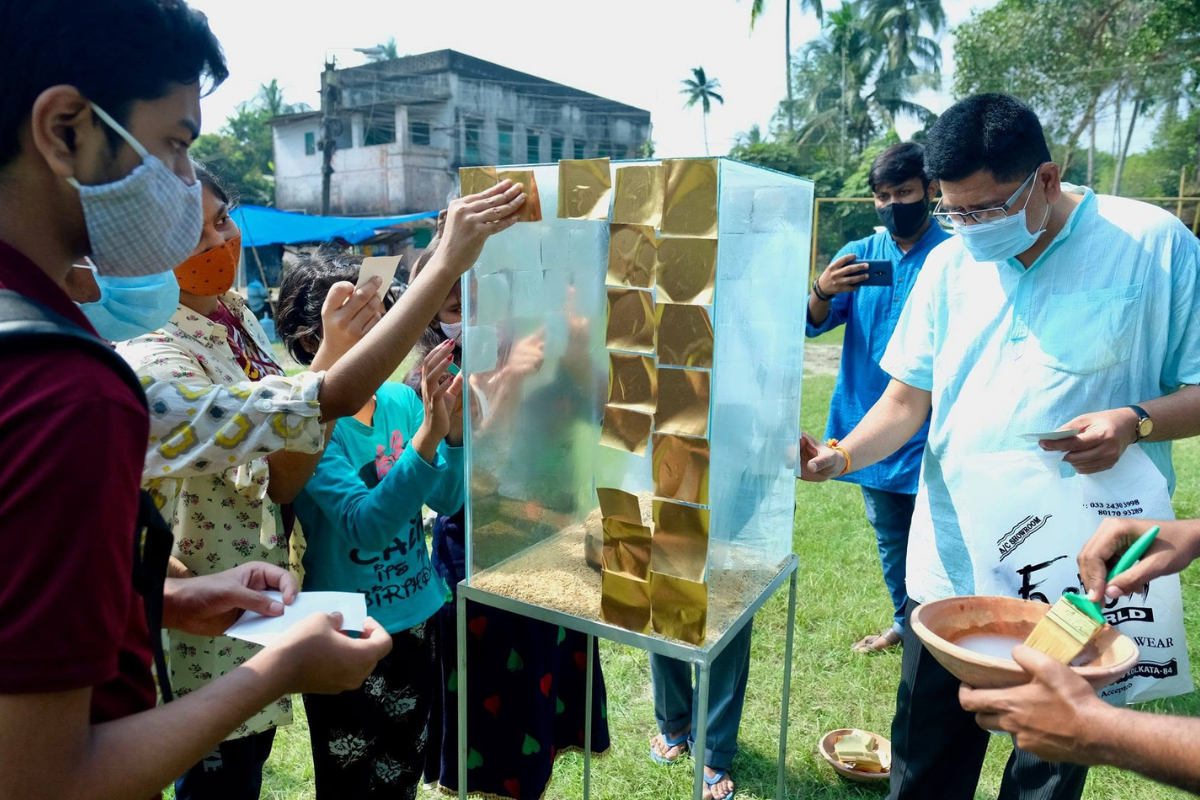
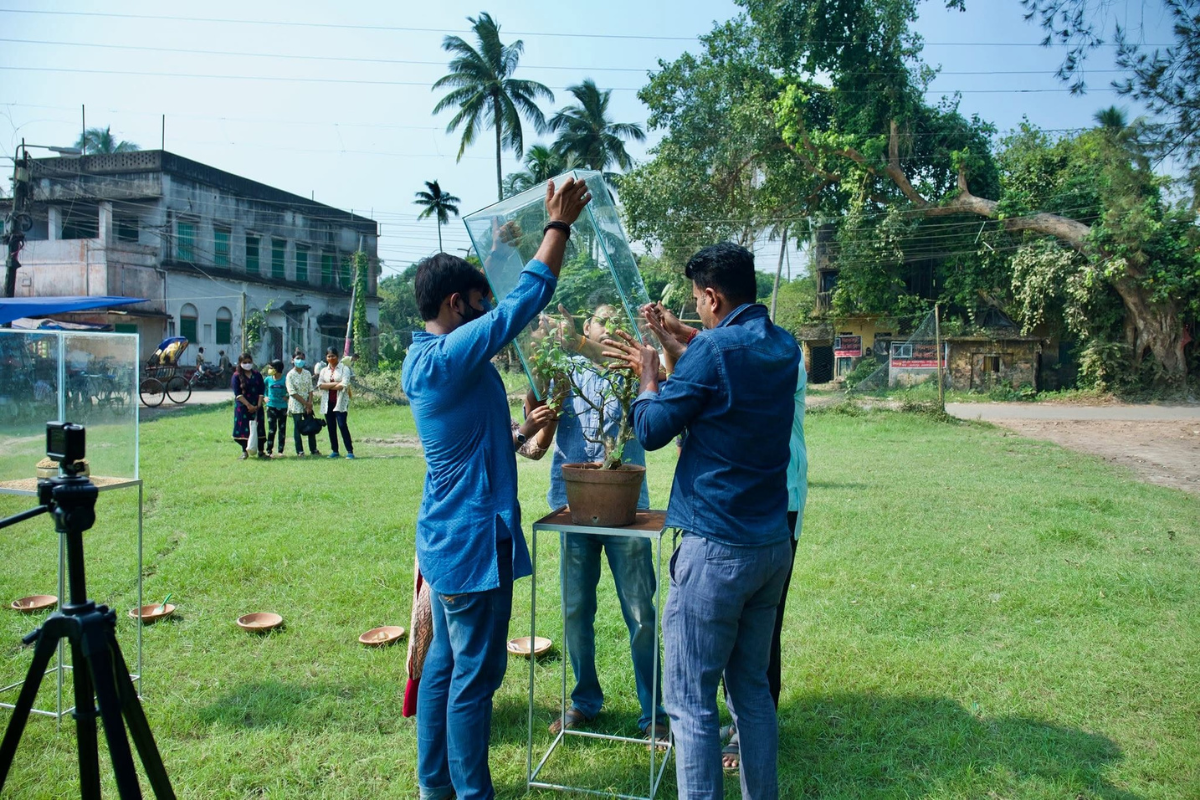
Srishtir Songrokkhon was a participatory street art event held in Boral, drawing over 1,200 community members to reflect on urgent environmental issues. Led by artist Samir Rana, the installation simplified complex concerns like food security, biodiversity loss, and water scarcity into a powerful public experience. Three symbolic objects—a bowl of rice, a tree, and a pot of water—were placed inside transparent boxes. Participants covered the boxes with golden paper, gradually obscuring the essentials inside. The act symbolized how food, plants, and water are becoming scarce due to human exploitation and unchecked consumption. The event turned the street into a space for dialogue and reflection, proving that creative public engagement can spark lasting environmental awareness.