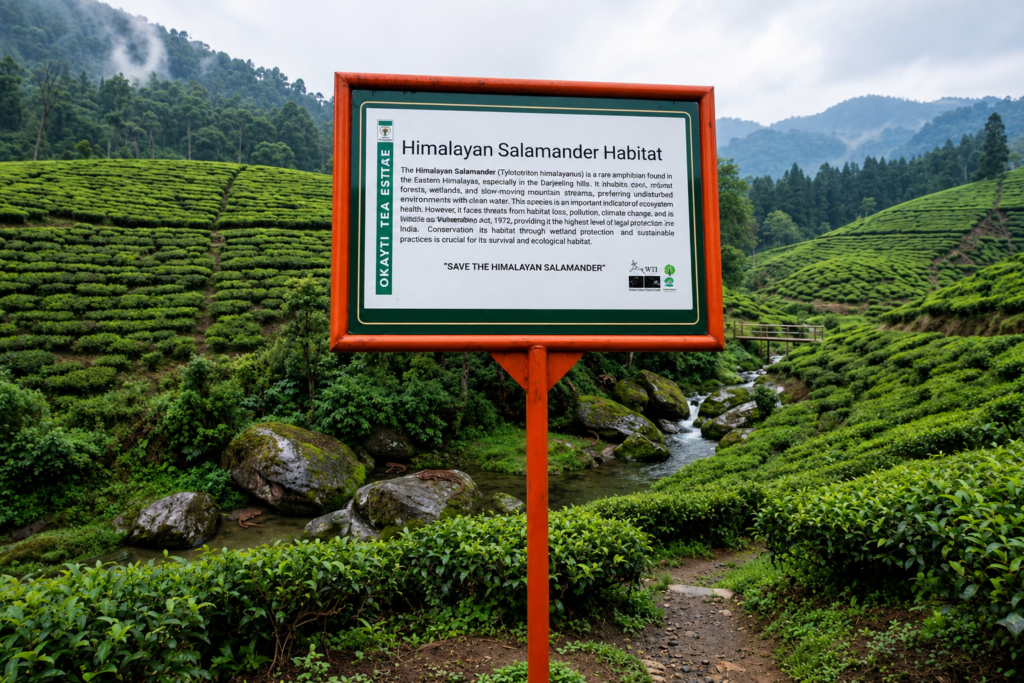
A Community livelihood driven conservation project
Why We Are Doing This
The Himalayan Salamander is a vulnerable amphibian found in the fragile wetland ecosystems of the Eastern Himalayas. Rapid habitat degradation, climate change, and increasing human activities threaten its survival. Long-term conservation of this unique species cannot rely on scientific research aloneāit requires the active participation of local communities. We believe that when conservation is linked with sustainable livelihoods and eco-tourism, communities become stronger partners in protecting their natural heritage.
What We Are Doing
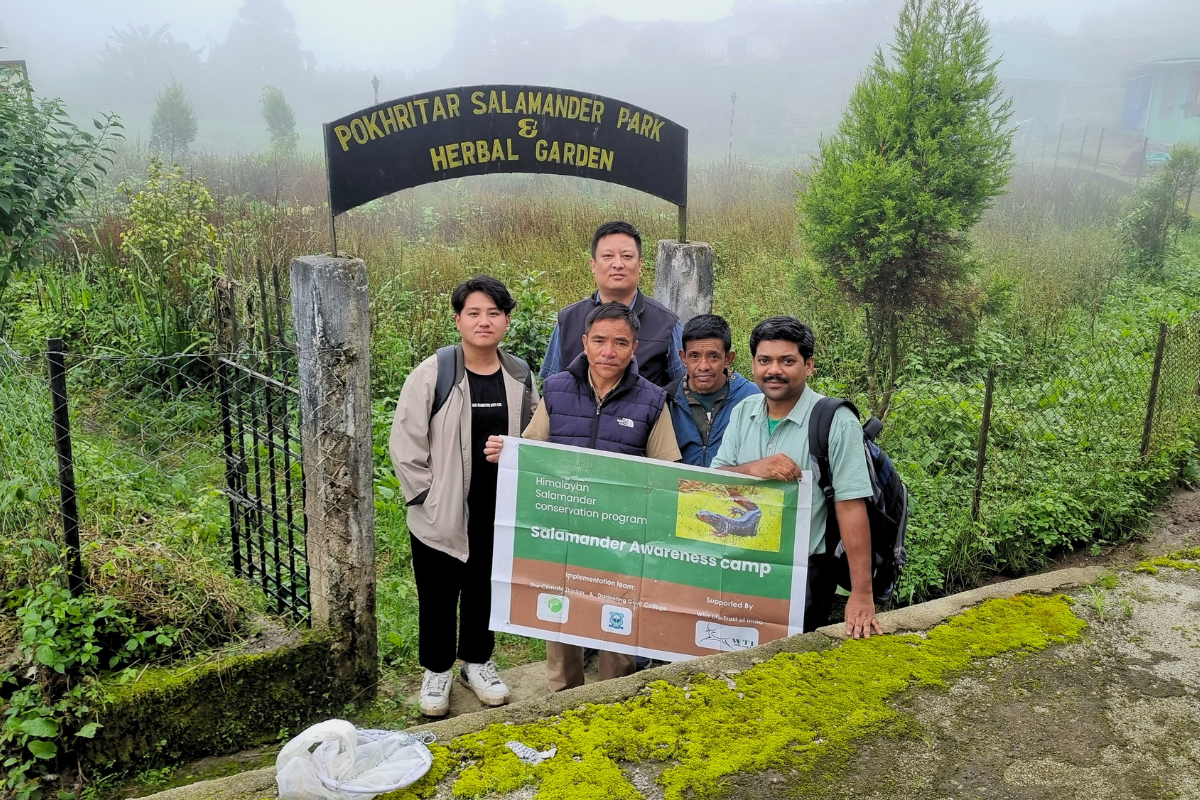
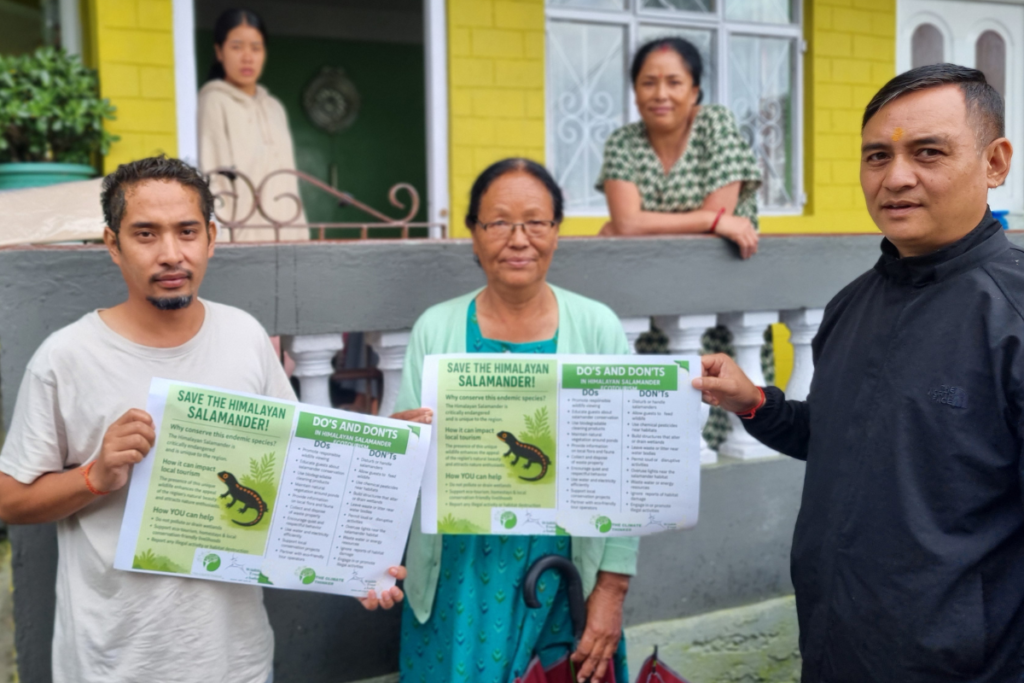
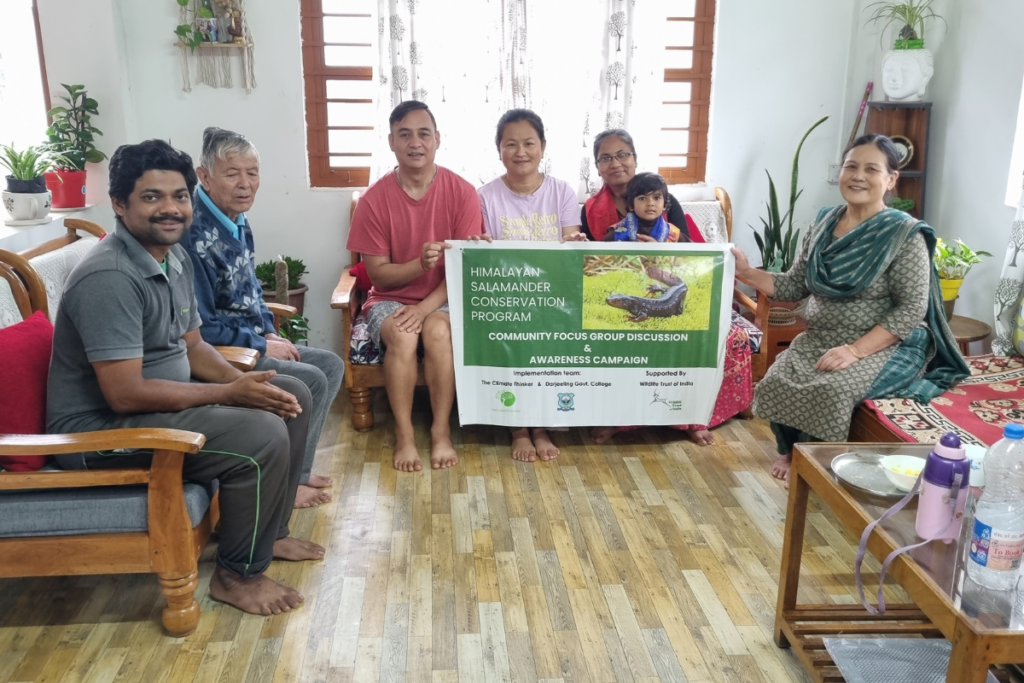
Our initiative promotes community-led conservation of the Himalayan Salamander by combining awareness, conservation, and sustainable livelihood opportunities. We conduct awareness programmes in Darjeeling, Kurseong, and Okayti Tea Estate to educate local communities about the ecological importance of the species and its habitat. At the same time, we are working to connect eco-tourism with salamander conservation, encouraging nature-based tourism that creates livelihood opportunities for local residents. We created a salamander trail in Mirik, it will raise awareness and will support local economy. By demonstrating that protecting the salamander can also support local incomes, we are fostering long-term community ownership of conservation efforts.

Where We Are Doing This
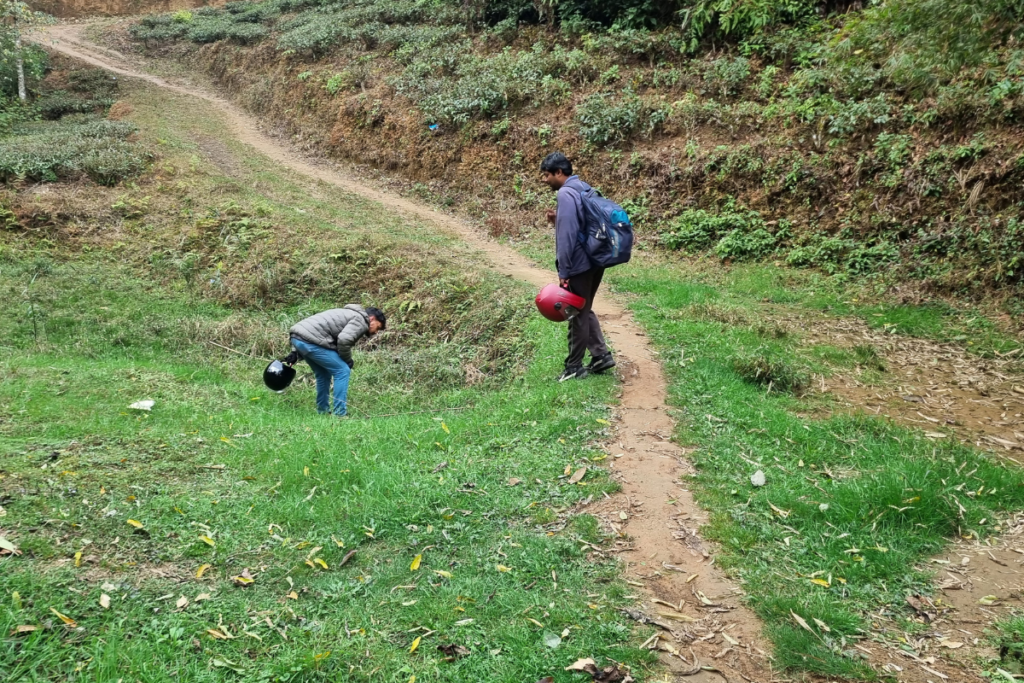
The project is being implemented in Darjeeling, Kurseong, and Okayti Tea Estate, where small wetlands provide critical habitats for the Himalayan Salamander. Working closely with local communities, the initiative promotes awareness, habitat protection, and community participation while exploring sustainable eco-tourism opportunities.
How Much Impact We Are Having
Our initiative is strengthening community participation in the conservation of the Himalayan Salamander by building awareness and creating opportunities for local involvement. By linking conservation with eco-tourism and sustainable livelihoods, we are encouraging communities to see the salamander not only as a species to protect but also as a valuable part of their natural heritage. This community-driven approach is laying the foundation for long-term conservation while supporting local economic resilience.